The Complete Guide to Kitchen Cabinet Design for Homes with High Ceilings
In a kitchen with high ceilings, plan the wall cabinets around the full height: run the tallest wall cabinets you can and finish with crown molding, stack a second row of shorter cabinets (often with glass doors) above them, or stop the cabinets at a planned height and treat the space above deliberately with lighting or a soffit. Keep everyday storage within reach and use the top tier for items you rarely need.
Key takeaways
- Do the math first: subtract the counter height and backsplash gap from the ceiling height to see how much wall you have to fill.
- Stacked uppers and tall cabinets turn ceiling height into storage; crown molding finishes the top.
- Upper tiers above reach should hold occasional items; keep a step stool or library-style plan in mind.
- Light colors on upper tiers keep a tall wall from feeling heavy.
- Leaving a gap above cabinets collects dust; if you leave it, light it or finish it on purpose.
Understanding High Ceilings
Most stock wall cabinets are sized for common ceiling heights. Once a ceiling rises above that, standard uppers stop well short of the ceiling and leave a band of empty wall. The design question is how to fill that band in a way that adds storage, looks proportional and stays usable.
Do the Math: How Much Wall Do You Have?
Using common conventions, base cabinets are 34-1/2 inches high, the countertop brings the work surface to about 36 inches, and wall cabinets typically start about 18 inches above the counter, roughly 54 inches from the floor. Everything above that line is wall-cabinet territory.
| Ceiling height | Space above about 54 in. | Common approach |
|---|---|---|
| 9 ft (108 in.) | About 54 in. | Tall uppers plus crown, or uppers plus a short stacked tier |
| 10 ft (120 in.) | About 66 in. | Uppers plus a stacked tier, glass doors on top |
| 12 ft and up | 78 in. or more | Stacked tiers, tall pantry walls, or uppers stopped at a planned height with a soffit or open wall |
Check the wall cabinet heights available for your door style in the catalog before finalizing the elevation, and confirm the ceiling height at several points; older homes are rarely level.
Strategies for Designing Kitchen Cabinets
1. Utilize Vertical Space
Run cabinets toward the ceiling to add storage and give the kitchen a built-in look. Tall pantry cabinets at the ends of runs do the same on full-height walls. Pre-assembled cabinets help on tall installs because the boxes arrive square; see our pre-assembled cabinets.
2. Stack Upper Cabinets
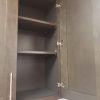
A second, shorter row of cabinets above the main uppers adds storage and visual height. Glass doors on the top tier lighten the wall and display items you rarely use. Align the stiles of both tiers so the stack reads as one design.
3. Incorporate Crown Molding
Crown molding closes the gap between the top cabinet and the ceiling and hides an uneven ceiling line. On very tall walls, a larger crown or a built-up molding keeps proportions right. See the crown molding guide.
4. Mix Open Shelving with Cabinets
Open shelves on part of a tall wall break up a large block of doors. Keep them for everyday items within reach, not above head height.
5. Choose the Right Cabinet Depth
Wall cabinets are commonly 12 inches deep and base cabinets 24 inches. Deeper wall cabinets above the refrigerator, often matched to the base depth, make that tall space reachable.
Popular Cabinet Styles for High Ceilings
Shaker Cabinets
Shaker doors repeat well on tall, stacked walls because the simple frame keeps the elevation calm. For an in-stock option, see our Espresso Shaker Cabinets or Pure White.
Raised-Panel Cabinets
Raised panels such as Millennium White suit traditional homes with tall ceilings and large crown moldings.
Modern Cabinets
Slim-frame shakers and simple doors with long bar pulls emphasize vertical lines in modern tall spaces.
Color and Finish Considerations
- Light colors on tall walls keep the room bright and avoid a heavy look.
- Dark colors work best on lower cabinets or an island, with lighter uppers.
- Glass doors on the top tier add depth and break up the wall.
Maximizing Storage in High Ceiling Kitchens
- Pull-down shelving inside upper cabinets brings items within reach.
- Top tier for occasional items: holiday dishes, serving pieces, small appliances used rarely.
- Corner solutions: lazy Susans or pull-outs; see lazy Susan vs. blind corner.
- Vertical dividers for trays above the refrigerator or oven.
Installation Tips for Tall Cabinet Walls
- Snap level lines for every tier from the high point of the floor and ceiling.
- Add blocking in the wall before drywall for upper tiers.
- Use a stable platform or scaffold; tall installs need two people.
- Join stacked cabinets securely and shim behind at studs; see shimming techniques.
- Install crown last, scribing to the ceiling.
Expert Tips for High Ceiling Kitchen Design
- Keep the work triangle efficient; tall storage should not push daily items out of reach.
- Use layered lighting: under-cabinet task lights, recessed or pendant lights, and lighting inside glass upper tiers.
- Plan a ladder or step stool location if the top tier will be used.
FAQ
How do you design kitchen cabinets for high ceilings?
Measure the wall height above the standard upper-cabinet line, then choose tall uppers with crown, a stacked second tier, or a planned stopping height with a soffit or open wall. Keep daily items at reach height, use upper tiers for occasional storage, and finish the top with crown molding scribed to the ceiling.
Should kitchen cabinets go to the ceiling?
In most kitchens, yes: cabinets to the ceiling add storage, avoid a dust-collecting gap and look built in. With very high ceilings, stacking a top tier or stopping at a planned height with a soffit can look better than one extremely tall cabinet. Use the top for items you rarely need.
What is a stacked cabinet?
A stacked cabinet is a second, shorter cabinet installed directly on top of a standard wall cabinet, often with glass doors. It extends the cabinetry toward a high ceiling, adds storage for occasional items and gives a custom look using standard cabinet sizes.
What do you do with the space above kitchen cabinets with high ceilings?
Fill it with stacked cabinets or a soffit, or leave it open on purpose with lighting and a clean top surface that is easy to dust. An unplanned gap collects grease and dust, so whichever option you choose, finish it intentionally.
What colors work best for tall kitchen cabinets?
Light colors on upper and stacked cabinets keep a tall wall from feeling heavy, while darker colors work well on base cabinets and islands. Glass doors on the top tier lighten the wall further.
Conclusion
High ceilings give a kitchen room to grow upward. Do the height math, choose tall or stacked uppers, finish with crown, and keep daily storage within reach. For in-stock cabinets in 15 door styles, contact us at CCC Cabinets, 2180 S Wolf Rd, Des Plaines, IL 60018, or call (872) 241-5525.
More in Cabinet Guides
Sourcing cabinets for a Chicagoland project?
CCC Cabinets supplies 15 door styles — including Pure White cabinets — at wholesale prices from our Des Plaines, IL warehouse. Confirm availability for your door style, then choose warehouse pickup near O’Hare or scheduled delivery across Chicagoland.
Door styles to explore: Pure White · Millennium White · Espresso Shaker
Browse all cabinet styles · Open a dealer account · Call (872) 241-5525 · Talk to our team