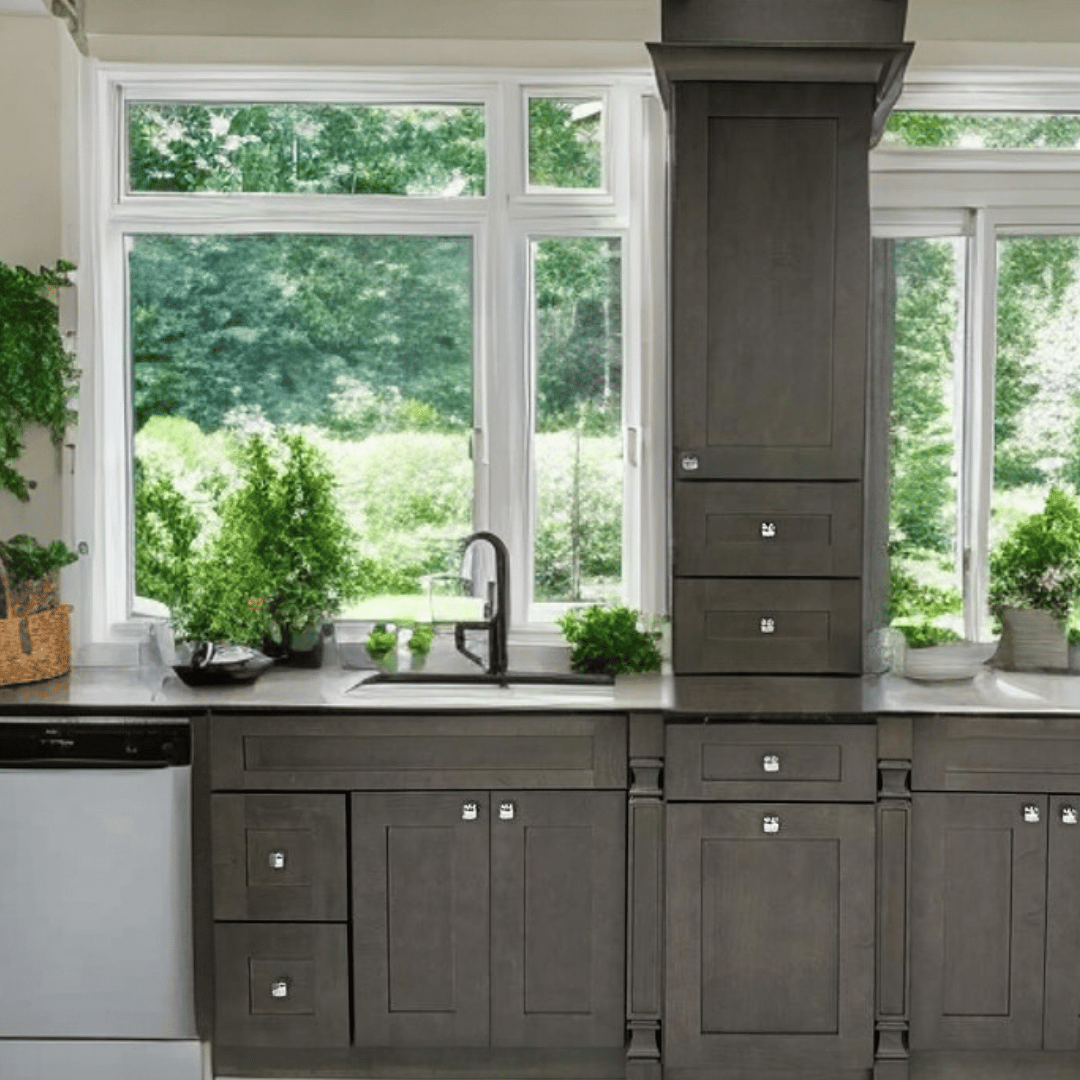
The Complete Guide to Transitional Kitchen Cabinet Design for Versatile Style
Transitional kitchen cabinets combine traditional proportions with modern restraint: a shaker or simple recessed-panel door, full overlay doors, a neutral or muted color, little or no ornamental molding, and simple hardware. The result reads classic in an older home and clean in a new one, which is why transitional cabinetry is the safest choice when a kitchen has to suit many tastes.
Planning a cabinet project in Chicagoland? CCC Cabinets is a wholesale-only supplier — browse the 15 in-stock door styles or open a trade account for wholesale pricing.
Key takeaways
- Transitional design bridges traditional warmth and modern simplicity; clean shaker profiles with classic proportions are its backbone.
- In-stock transitional-friendly CCC styles include Pure White, Millennium Grey and Shaker Blue, all stocked in Des Plaines as assembled or RTA cabinets.
- The style lives in the details: door profile, color, sheen, hardware and how much molding you add. Get those five right and almost any layout reads transitional.
- Two-tone schemes (light perimeter, darker island) are the most common way to add character without leaving the style.
What makes cabinetry transitional
Transitional design takes the proportions and warmth of traditional kitchens and removes the ornament. In cabinetry that means simple door profiles, straight lines, restrained color and hardware that is plain rather than decorative. The quickest way to judge a design is element by element:
| Element | Transitional choice | Pushes it too far one way |
|---|---|---|
| Door profile | Shaker (flat recessed panel) or a simple, lightly beveled raised panel | Ornate cathedral arches (traditional) or slab doors everywhere (modern) |
| Overlay | Full overlay, square edges | Heavy applied moldings on every door |
| Color | White, off-white, grey, greige, navy, muted green, warm wood stain | High-gloss saturated color across the whole kitchen |
| Sheen | Matte to satin | Mirror-gloss lacquer |
| Crown and trim | Simple stepped or flat crown, or none to the ceiling | Multi-piece ornate crown with dentil detail |
| Hardware | Bar pulls, simple cup pulls, round or square knobs | Highly decorative backplates, or no visible hardware at all |
| Counters and backsplash | Quiet stone or quartz, tile with a simple pattern | Busy granite with a busy tile, or all-white minimalism |
Transitional cabinet door styles
The door does most of the work. Shaker doors are the default because the recessed square panel is old enough to feel classic and simple enough to feel current. Mini shaker doors, with a narrower frame, lean slightly more modern. A simple raised panel with a subtle bevel leans slightly more traditional and works well where the house has traditional trim. Here is how CCC’s 15 in-stock styles map to a transitional plan:
| CCC style | Profile and finish | Role in a transitional kitchen |
|---|---|---|
| Pure White | Flat-panel shaker, painted white | The neutral base for perimeter cabinets |
| Light Grey | Flat-panel shaker, painted grey | Soft neutral perimeter or a quiet island |
| Dark Grey | Flat shaker, stained grey with visible grain | Warmer, grain-forward option; strong island color |
| Espresso Shaker | Flat-panel shaker, dark stain with wood grain | Dark contrast island or a traditional-leaning room |
| Shaker Blue | Shaker, painted deep navy | The classic transitional island color |
| Matcha Latte | Shaker, painted soft sage green (new 2026) | Muted color that still reads neutral |
| Black Roast | Shaker, painted deep black (new 2026) | High-contrast island or bar wall |
| Cappuccino Shaker | Shaker, warm brown stain | Adds wood warmth next to white or grey |
| Mini White Shaker | Mini shaker, painted | A slimmer, more modern take on white shaker |
| Mini Shaker Cappuccino | Mini shaker, stained | Modern-leaning wood tone |
| Millennium Grey | Raised panel with bevel, stained grey | Traditional-leaning grey for older homes |
| Millennium Blue | Simple raised panel with a subtle bevel, painted navy | Navy with a touch more detail than shaker |
| Millennium White | Raised panel with angled bevel, painted white | White kitchens in homes with traditional millwork |
| Millennium Off White | Raised panel, cream/ivory paint | A warmer white that pairs with stained wood and brass |
| Millennium Cappuccino | Framed raised panel, cappuccino stain (new 2026) | Warm wood with traditional detail |
A useful rule: pick one door profile for the whole kitchen and let color create the contrast. Mixing shaker on the perimeter with a raised panel on the island can work, but it is harder to keep balanced; our guide to mini shaker door profiles covers when a slimmer frame makes sense.
Color palettes and finishes
Color selection decides whether a transitional kitchen feels warm, crisp or moody. The palettes that work most often:
- Soft neutrals: white, cream, light grey and greige provide a calm backdrop and suit almost any countertop.
- Contrasting accents: navy, charcoal, black or a muted green on the island adds depth without leaving the style.
- Two-tone cabinets: a light perimeter with a darker island, or light uppers with darker lowers. Keep it to two cabinet colors plus wood or stone.
- Wood warmth: a stained door with visible grain, used on an island or a hutch, keeps an all-painted kitchen from feeling cold.
For sheen, matte and satin finishes read transitional; high gloss pushes the kitchen toward contemporary. Whites vary more than people expect: a cream such as Millennium Off White looks very different from a crisp white next to stainless appliances, so judge colors on a full door in your own light. Our post on full door samples explains why.
Hardware and accessories for transitional cabinets
Hardware is where many transitional kitchens tip too traditional or too modern. Keep it simple and consistent:
- Choose simple designs: bar pulls, plain cup pulls on drawers and simple knobs on doors complement clean shaker lines.
- Mix materials with intent: one main finish (brushed nickel, matte black or brass) on cabinets, with a second finish allowed on lighting or the faucet.
- Size to the drawer: long drawers usually take a longer pull or two pulls. See our guides to choosing cabinet hardware size and hardware placement standards.
- Keep the inside quiet too: soft-close hinges and full-extension, soft-close drawers fit the calm, practical intent of the style.
Choosing the right materials
Transitional is a look, not a construction method, so judge the cabinet box the same way you would for any kitchen. A common, durable combination is a plywood box, a solid wood face frame and an MDF center panel in a painted door.
| Material | Where it is used | What to check |
|---|---|---|
| Plywood | Box sides, backs, shelves | Thickness and grade; plywood holds screws and resists sag well |
| Particleboard | Boxes and shelves on budget lines | Edge sealing and shelf thickness; vulnerable to water at the sink base |
| MDF | Door center panels, especially painted doors | Smooth, stable surface for paint; protect edges from standing water |
| Solid wood | Face frames, door frames, drawer boxes | Joinery (dovetail drawers) and finish quality |
| Laminate or thermofoil | Budget and contemporary doors | Edge peeling near heat sources; rarely reads transitional |
Our cabinet materials guide and solid wood vs MDF door guide go deeper on each option.
Layout and detailing tips
Creating a transitional kitchen is mostly restraint. These details make the biggest difference:
- Plan for open spaces: in open-concept homes, choose a cabinet color that works with the living room’s trim and flooring, since both are seen together.
- Simplify the crown: a simple flat or stepped crown, or cabinets run to the ceiling with a small filler, keeps the look clean.
- Use one focal point: a contrasting island, a range hood wall or a glass-door hutch, not all three.
- Limit open shelving: a short run of shelves near the range or sink adds warmth; long runs push the look toward farmhouse.
- Prioritize functionality: drawer bases, pull-outs and a tall pantry make the kitchen work; the work triangle and aisle widths still apply (see our kitchen remodeling guide for NKBA clearances).
- Light the cabinets: under-cabinet lighting shows off the door profile and the countertop.
Transitional kitchen planning checklist
- One door profile chosen for the whole kitchen.
- Two cabinet colors at most, plus wood or stone.
- Sheen confirmed as matte or satin on a full sample door.
- One primary hardware finish, sized to each drawer width.
- Crown and filler details drawn on the elevation, not decided on site.
- Countertop and backsplash picked with the door sample in hand.
- Appliance sizes confirmed before the cabinet order.
How CCC Cabinets fits a transitional kitchen
CCC Cabinets is a wholesale supplier in Des Plaines, near O’Hare, and most of its 15 in-stock door styles are shaker or simple raised-panel designs, which is exactly the vocabulary of transitional design. Every style shares the same construction: 1/2-inch A-grade plywood box sides, a 1/2-inch plywood back, 3/4-inch plywood shelves, 3/4-inch birch face frames, MDF door center panels, 17 mm solid wood dovetail drawer boxes, 6-way adjustable soft-close hinges and full-extension soft-close glides. Cabinet interiors match the door color on every style except Black Roast and Matcha Latte, whose interiors are a natural wood tone.
Because every style is stocked, a perimeter in one style and an island in another can be picked up or delivered together. Confirm availability for your door style and items when you order. CCC sells to the trade, so homeowners buy through their contractor or designer; contractors can open a trade account. Browse every style on the cabinet collections page.
Frequently Asked Questions
What is a transitional kitchen cabinet?
A transitional kitchen cabinet blends traditional and modern design. It usually has a shaker or simple recessed-panel door, full overlay construction, a neutral or muted color in a matte or satin finish, minimal molding and simple hardware. The look sits between ornate traditional cabinetry and flat slab modern cabinetry, so it suits both older and newer homes.
Are shaker cabinets considered transitional?
Yes. Shaker cabinets are the most common transitional door style because the square recessed panel is classic but plain. Painted white, grey, navy or green shaker doors with simple pulls read transitional. The same door can lean traditional with ornate crown and decorative knobs, or modern with a mini shaker frame and long bar pulls.
What colors work best for transitional cabinets?
Soft neutrals such as white, off-white, light grey and greige work best for the main cabinets, with a deeper accent such as navy, charcoal, black, muted green or a warm wood stain on the island. Matte and satin finishes suit the style better than high gloss. Check every color on a full door sample in the room’s own light.
What hardware goes with transitional cabinets?
Simple bar pulls, plain cup pulls and round or square knobs in brushed nickel, matte black or brass. Use one main finish on the cabinets, size pulls to the drawer width, and avoid both highly ornate backplates and fully hidden hardware, which push the kitchen toward traditional or modern.
What is the difference between transitional and modern farmhouse cabinets?
Both often use shaker doors, but modern farmhouse adds rustic elements such as long runs of open shelving, distressed or knotty wood, apron sinks and black iron hardware. Transitional stays quieter: smoother finishes, fewer open shelves, simpler hardware and stone or quartz surfaces rather than reclaimed materials.
Can transitional cabinets work in an older Chicago home?
Yes, and they are often the best fit. A shaker or simple raised-panel door respects older trim and proportions, while neutral paint and simple hardware keep the kitchen current. In homes with heavy traditional millwork, a lightly beveled raised panel or a cream finish ties the kitchen to the rest of the house.
Where can contractors buy transitional kitchen cabinets in the Chicago area?
CCC Cabinets in Des Plaines stocks 15 door styles, most of them shaker or simple raised-panel designs suited to transitional kitchens, as assembled or ready-to-assemble cabinets. Contractors, remodelers and designers buy on a trade account, and homeowners can visit the showroom with their contractor to see the doors in person.
Plan your transitional kitchen
A transitional kitchen succeeds when every choice is a little quieter than it could be: one door profile, a calm palette with one accent, a matte or satin finish and simple hardware. To see the doors side by side, schedule a showroom visit at 2180 S Wolf Rd in Des Plaines or call (872) 241-5525. For more on CCC, visit CCC Cabinets.
More in Cabinet Guides
Sourcing cabinets for a Chicagoland project?
CCC Cabinets supplies 15 door styles — including Millennium Off White cabinets — at wholesale prices from our Des Plaines, IL warehouse. Confirm availability for your door style, then choose warehouse pickup near O’Hare or scheduled delivery across Chicagoland.
Door styles to explore: Millennium Off White · Shaker Blue · Mini White Shaker
Browse all cabinet styles · Open a dealer account · Call (872) 241-5525 · Talk to our team