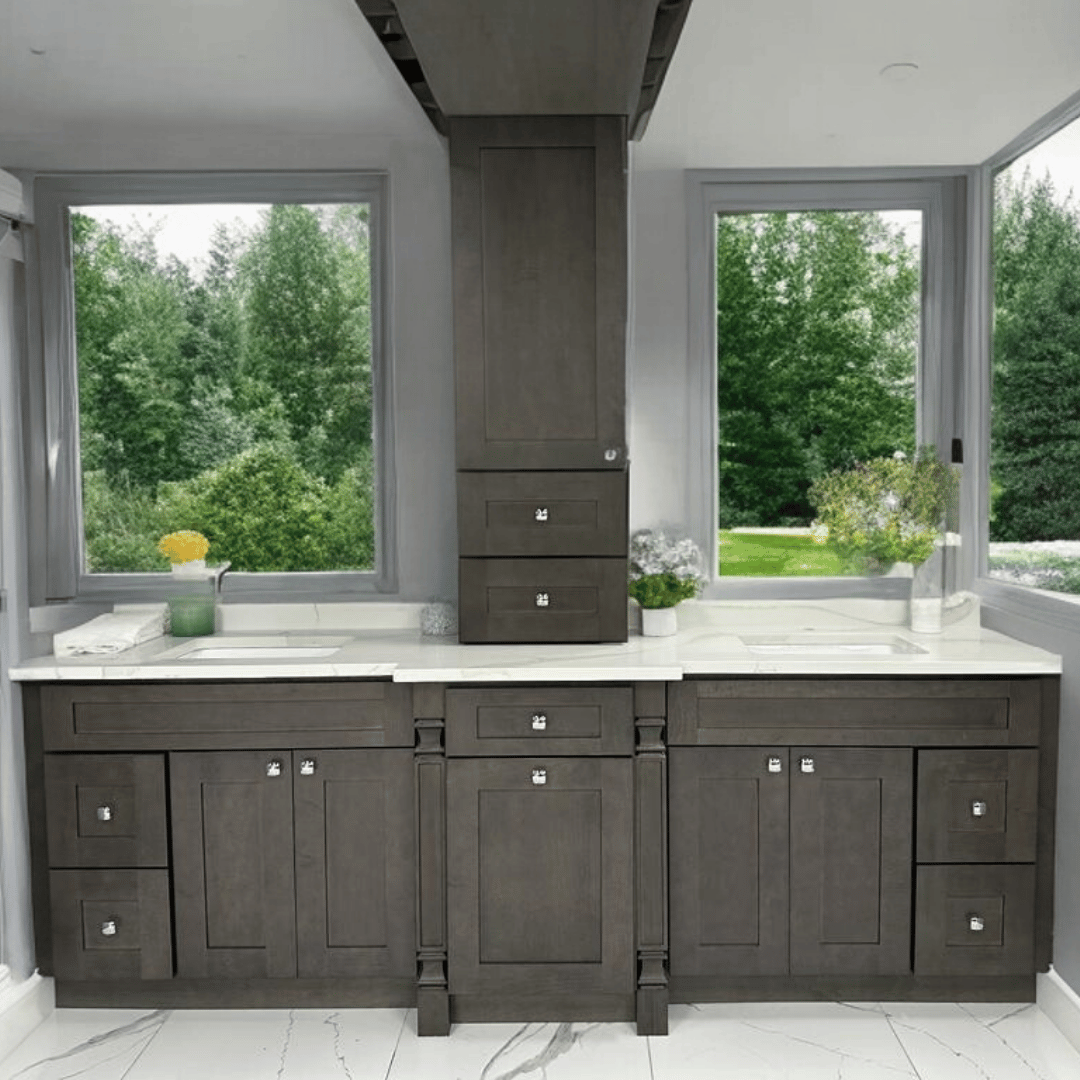
The Complete Guide to Kitchen Cabinet Crown Molding and Trim Details
Crown molding on kitchen cabinets is decorative trim fastened along the top of the wall cabinets, either to finish their top edge or to close the gap up to the ceiling. The main types are cove, traditional (ogee) crown, flat or “shaker” crown, and stacked crown built from several pieces. Choose the profile to match the door style, and the material to match the cabinet finish.
Key takeaways
- Cabinet crown is not room crown. It attaches to the cabinets, not the wall-ceiling joint, and has to clear the doors.
- Match the profile to the door: flat or small cove crown for shaker and modern kitchens; ogee and stacked crown for raised-panel and traditional kitchens.
- Stained cabinets need stain-matched molding; paint-grade MDF or polyurethane only works where the crown will be painted.
- Full-overlay doors usually need a riser strip on top of the cabinet so the crown sits above the door swing.
- Crown is one of several trim details, with light rail, toe kick, fillers, scribe molding and end panels, that make cabinets look built-in.
What Crown Molding Does on Kitchen Cabinets
In a room, crown molding covers the joint where the wall meets the ceiling. On kitchen cabinets, crown molding is a separate piece of trim mounted on top of the wall cabinets and tall cabinets. It runs along the front and around any exposed ends, finishing the top of the cabinetry the way a cornice finishes a piece of furniture.
Cabinet crown serves three practical purposes beyond looks:
- Closing the gap between the cabinet tops and the ceiling, which removes a dust shelf.
- Hiding an uneven ceiling, since a crown with a flat top edge can be scribed to the ceiling while the cabinets stay level.
- Making standard cabinets look taller and more custom without changing the boxes.
Types of Crown Molding for Kitchen Cabinets
Crown molding is grouped by profile (its shape) and by material. These are the profiles used most on kitchen cabinets:
| Profile | What it looks like | Best with |
|---|---|---|
| Cove crown | A simple concave curve; small and understated | Shaker and transitional kitchens; low ceilings |
| Traditional (ogee) crown | An S-shaped curve with a classic, detailed silhouette | Raised-panel and traditional kitchens |
| Flat or “shaker” crown | A square or slightly stepped flat band with clean edges | Shaker, modern and transitional kitchens |
| Stacked crown | Several pieces layered: a riser or flat band, crown, sometimes a small cap | Tall ceilings; closing a large gap to the ceiling |
| Dentil or decorative crown | Crown with a repeating block or carved detail | Formal traditional kitchens; use sparingly |
| Flexible crown | Bendable resin crown in standard profiles | Curved cabinet runs or radius ends |
Crown Molding Materials
| Material | Strengths | Watch for |
|---|---|---|
| Solid wood or wood-veneered molding | Can be stained to match stained cabinets; crisp, durable profiles | Needs careful finish matching; can move slightly with humidity |
| Prefinished cabinet-matched molding | Same color and sheen as the cabinets; no site finishing | Order enough for returns and mistakes; touch-up needed on cut ends |
| MDF (paint-grade) | Smooth, stable and economical for painted kitchens | Not for stain; swells if it gets wet; cut ends must be sealed |
| Polyurethane | Lightweight, easy to cut, moisture-resistant; good for detailed profiles | Paint-grade only; not suited to stained wood cabinets |
| Polystyrene | Lowest cost; very light | Dents easily; better for room crown than for cabinets |
For stained cabinets, the most reliable match is molding made and finished to match the cabinet line. For painted cabinets, MDF or polyurethane crown painted on site works, but plan for a careful color and sheen match.
Choosing the Right Crown Molding for Your Kitchen
Start with how the cabinets meet the ceiling, then pick the profile and material:
- Cabinets stop short of the ceiling: a single cove or flat crown finishes the top edge. Leave a clear, intentional space above, or use it for decor or lighting.
- Cabinets run to the ceiling: use a stacked crown, or a flat band plus crown, to close the gap. Leave room to scribe the top edge to the ceiling.
- Soffit above the cabinets: a small crown or flat band against the soffit face works better than a large crown.
- Style: flat and cove profiles suit shaker doors; ogee and stacked crowns suit raised-panel doors. Avoid a very ornate crown on a minimal door.
- Proportion: a larger crown suits taller ceilings and taller wall cabinets; on low ceilings, keep it small so the cabinets do not look squat.
- Finish: match the cabinet color and sheen exactly, or make a deliberate contrast, never a near miss.
The cabinet styles on the CCC Cabinets page show the difference between shaker and raised-panel doors, which is the first thing that decides the crown profile.
Other Cabinet Trim Details
Crown is the most visible trim piece, but a finished kitchen usually uses several:
- Light rail (bottom molding): trim under the wall cabinets that hides under-cabinet lights and finishes the bottom edge.
- Toe kick: the recessed base at the bottom of base cabinets, covered with a finished kick board.
- Fillers: strips that close gaps between cabinets and walls or appliances so doors and drawers clear. See our guide to cabinet filler installation.
- Scribe molding: thin, flexible trim that covers small gaps where cabinets meet uneven walls; for larger gaps, see cabinet scribing techniques.
- End panels: finished panels on exposed cabinet sides, islands and refrigerator surrounds; see end panel and molding installation.
- Valance: a decorative piece over a sink window between two wall cabinets.
Installation Guide for Crown Molding
Cabinet crown is installed after the wall cabinets are hung, level and fastened, and after doors are adjusted. A careful installer can do it; tight miters on prefinished molding take practice.
Tools: miter saw with a fine-tooth blade, pin or brad nailer, wood glue or molding adhesive, clamps, tape measure, angle gauge, sandpaper, and touch-up finish or paint.
- Check door clearance. Open every wall cabinet door. With full-overlay doors, crown fixed directly to the face frame can hit the doors; plan a riser or nailer strip on top of the cabinets.
- Install risers or nailers. Fasten a flat strip along the top of the cabinets, set back or flush as the profile requires, so the crown has solid backing and sits above the doors.
- Measure each run. Measure along the cabinet fronts and exposed ends; note outside corners and where the crown dies into a wall.
- Cut test pieces. Find the crown’s spring angle and cut a pair of scrap miters first. Many installers cut crown upside down and backward on the saw, nested against the fence at its installed angle.
- Dry-fit. Fit the front and return pieces together before nailing; adjust until the miters close.
- Glue and pin. Glue the miters, and pin the crown into the riser or nailer rather than through the visible cabinet face. Clamp outside corners until the glue sets.
- Scribe to the ceiling if needed. On crown that runs to the ceiling, scribe the top edge or add a small cap to cover an uneven ceiling line.
- Finish. Fill pin holes with matching filler, touch up cut ends, and caulk only paint-grade joints, never stained ones.
For professional installation, work with a licensed local contractor; for cabinet questions, contact CCC Cabinets.
Common Crown Molding Mistakes
- Installing crown before checking that the doors can open fully.
- Nailing crown to the wall or ceiling instead of the cabinets, so it cracks when the house moves.
- Using paint-grade MDF on stained cabinets.
- Choosing a profile too large for the ceiling height.
- Running crown tight to a ceiling that is not level, so the gap shows; scribe it or add a cap instead.
- Not ordering extra molding for returns, test cuts and mistakes.
Maintenance and Care of Crown Molding
- Regular cleaning: dust the top edges, where grease and dust collect near the range. Use a soft cloth with mild detergent and warm water, then dry; avoid silicone or wax products on cabinet finishes.
- Check for damage: look for open miters, cracked joints or peeling finish, especially near the range and dishwasher where heat and steam are highest.
- Touch up as needed: keep a small amount of matching touch-up finish or paint from the original job.
Crown Molding vs. Trim
Crown molding is one type of trim. “Trim” is the general term for every finishing piece in a room: baseboards, door and window casing, chair rail, and on cabinets, light rail, toe kick, fillers, scribe molding and crown. Crown is specifically the profile at the top, whether at the wall-ceiling joint or on top of the cabinets.
How CCC Cabinets Fits
CCC Cabinets supplies kitchen cabinets in 15 door styles from its Des Plaines warehouse. All styles are full-overlay with a 3/4″ birch face frame and 1/2″ A-grade plywood boxes, which give crown risers and nailers solid material to fasten into. Shaker styles such as Pure White and Shaker Blue suit flat and cove crowns; raised-panel styles such as Millennium White and Millennium Cappuccino suit ogee and stacked crowns.
When you request a quote, list the crown, light rail and other trim your design calls for and confirm what is available in your door style’s finish. The order process page covers how orders and modifications work. Contractors can set up pricing with a trade account.
Frequently Asked Questions
What types of crown molding are used on kitchen cabinets?
The most common types are cove crown, traditional ogee crown, flat or shaker crown, and stacked crown made of several layered pieces. Dentil and other decorative crowns are used in formal kitchens, and flexible crown is used on curved runs. Flat and cove profiles suit shaker doors; ogee and stacked profiles suit raised-panel doors.
What is crown molding on cabinets?
It is trim mounted on top of the wall and tall cabinets, running across the front and around exposed ends. It finishes the top edge, can close the gap to the ceiling, and can hide an uneven ceiling line. Unlike room crown, it is fastened to the cabinets rather than to the wall and ceiling.
Should kitchen cabinets have crown molding?
Not always. Crown suits traditional and transitional kitchens and cabinets that run to the ceiling. Modern kitchens often skip it or use a flat band for a cleaner look. If there is a gap above the cabinets, crown or a flat band makes the top edge look finished and intentional.
Can I install crown molding on cabinets myself?
Yes, if you are comfortable cutting accurate miters. Add a riser strip so the crown clears the doors, cut test pieces to find the right angle, glue and pin the miters, and fasten into the riser rather than the visible cabinet face. Prefinished molding is less forgiving, so buy extra for mistakes.
What material is best for cabinet crown molding?
For stained cabinets, use wood or veneered molding finished to match the cabinets. For painted cabinets, MDF or polyurethane crown painted to match works well and costs less. Polystyrene is very light and inexpensive but dents easily, so it is better suited to room crown than cabinets.
What is the difference between crown molding and trim?
Trim is the general term for all finishing pieces, including baseboards, casings, light rail, fillers and toe kicks. Crown molding is one specific trim profile used at the top of a wall or on top of cabinets. Every crown is trim, but not every trim piece is crown.
Conclusion
Crown molding is a small part of the cabinet order that has a large effect on how finished a kitchen looks. Decide early how the cabinets meet the ceiling, match the profile to the door style and the material to the finish, and plan risers so the crown clears full-overlay doors.
To compare door styles before choosing your crown, visit the CCC Cabinets showroom at 2180 S Wolf Rd, Des Plaines, IL 60018, or call (872) 241-5525. Trade customers can open an account, and anyone with questions can contact us.
More in Cabinet Guides
Sourcing cabinets for a Chicagoland project?
CCC Cabinets supplies 15 door styles — including Pure White cabinets — at wholesale prices from our Des Plaines, IL warehouse. Confirm availability for your door style, then choose warehouse pickup near O’Hare or scheduled delivery across Chicagoland.
Door styles to explore: Pure White · Millennium White · Shaker Blue
Browse all cabinet styles · Open a dealer account · Call (872) 241-5525 · Talk to our team