Shaker Cabinets vs Raised Panel – Chicago Contractor’s 2026 Guide
Shaker and raised-panel cabinets are both five-piece doors with a frame around a center panel. On a shaker door the center panel is flat and recessed behind a square-edged frame; on a raised-panel door the center panel is profiled so its middle sits forward, closer to the face of the frame. Shaker reads clean and suits most kitchens; raised panel reads traditional and suits homes with detailed trim and crown.
Key takeaways
- Shaker = flat recessed center panel; raised panel = beveled or profiled center panel.
- Shaker fits traditional, transitional and modern kitchens; raised panel fits traditional homes best.
- Raised panels have more profile edges, so they take a little more effort to clean.
- Cost depends on the line and construction, not on the door profile alone.
- For shaker vs. slab (flat front) doors, see shaker vs. modern flat panels.
Understanding Shaker Cabinets
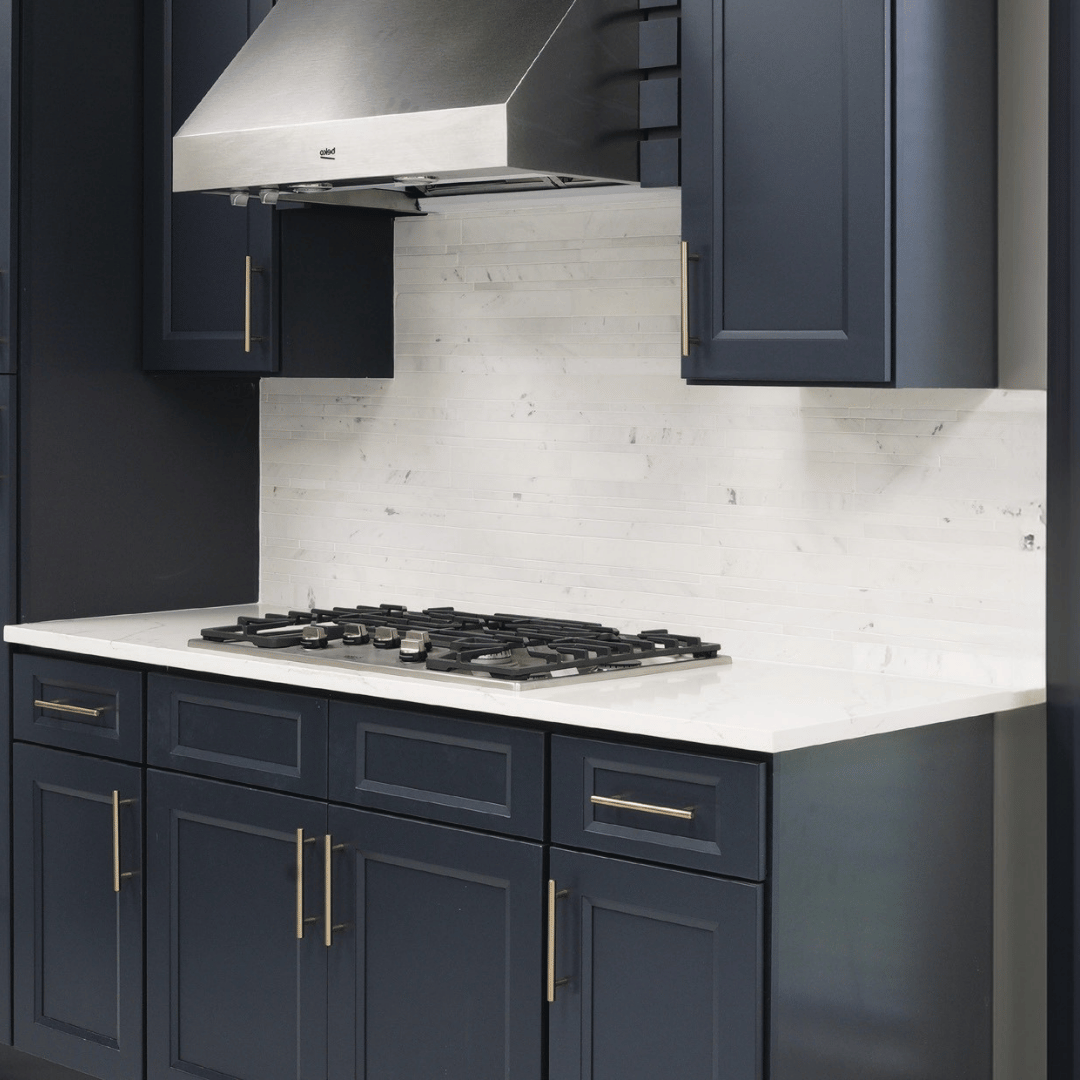
Shaker cabinets take their name from the simple furniture of the Shaker communities. The door has four frame pieces (two rails and two stiles) around a flat center panel set back from the frame. The inside edges are square, with no decorative profile. That simplicity is why shaker works with almost any color, hardware and countertop.
Advantages of Shaker Cabinets
- Versatility: changes character with color and hardware, from farmhouse to modern.
- Calm look: works well on long runs and tall, stacked walls.
- Easy cleaning: a flat panel with simple inside corners.
- Broad appeal: a safe choice for rentals and resale.
Exploring Raised Panel Cabinets
A raised-panel door has a center panel shaped with a bevel or profile, so the field of the panel stands forward. Profiles range from a simple angled bevel to more ornate cathedral or arched shapes. Raised panels pair naturally with crown molding, decorative trim and traditional architecture.
Advantages of Raised Panel Cabinets
- Depth and shadow: the profile catches light and adds dimension.
- Traditional fit: matches older homes and formal interiors.
- Variety: simple bevels to more decorative profiles.
Key Differences Between Shaker and Raised Panel Cabinets
| Factor | Shaker | Raised panel |
|---|---|---|
| Center panel | Flat, recessed | Profiled, raised toward the frame face |
| Frame edge | Square | Square or profiled, depending on style |
| Look | Clean, versatile | Traditional, formal |
| Best house styles | Most homes and condos | Traditional homes, older trim-heavy interiors |
| Cleaning | Simple inside corners | More edges and grooves to wipe |
| Hardware | Knobs, cup pulls, bar pulls | Knobs, cup pulls, traditional handles |
Design and Style
Choose by the house as much as by taste. In a Chicago bungalow with original trim, a simple raised panel or a shaker in a warm color both work; in a modern condo, shaker is the natural choice.
Cost Considerations
Do not assume one profile costs more. Price depends on the cabinet line, box construction and finish. When both styles share the same box, as at CCC Cabinets, the choice is mostly about the look.
Versatility
Shaker adapts more easily to different styles. Raised panel is strongest in traditional settings.
Installation and Maintenance
Installation is the same for both: the box, hinges and drawers do not change with the door profile. Clean both with a soft cloth, mild detergent and warm water; on raised panels, wipe the profile grooves where dust collects. Avoid silicone and wax products on any finish.
Choosing the Right Style for Your Project
- Look at the house: trim, doors and windows usually point to one style.
- Consider the client: clean and versatile, or traditional and formal?
- Think about resale or rental: shaker is the broadly accepted choice.
- Check the whole palette: countertop, backsplash and hardware.
- See doors in person under real lighting.
Shaker and Raised Panel Styles at CCC Cabinets
All 15 CCC in-stock styles share the same plywood box, soft-close hinges and dovetail drawers, so you can choose the profile on looks alone.
- Shaker: Pure White, Espresso Shaker, Light Grey, Dark Grey (stained flat shaker), Shaker Blue, Black Roast, Matcha Latte, Cappuccino, plus the narrow-frame Mini White Shaker and Mini Shaker Cappuccino.
- Raised panel: Millennium White (angled bevel), Millennium Off White (cream), Millennium Blue (simple raised panel with a subtle bevel), Millennium Grey (stained grey) and Millennium Cappuccino (framed raised panel).
Compare them on the cabinet styles page or at the Des Plaines showroom.
Frequently Asked Questions
What is the difference between shaker and raised panel cabinets?
Both are five-piece doors. A shaker door has a flat center panel recessed behind a square-edged frame. A raised-panel door has a center panel shaped with a bevel or profile so its middle stands forward. Shaker looks clean and versatile; raised panel looks more traditional and formal.
Is shaker a recessed panel cabinet?
Yes. Shaker is the best-known recessed-panel style: the flat center panel sits behind the face of the frame. Other recessed-panel doors may add a small bevel or profile on the frame’s inside edge, but the classic shaker keeps square edges.
Are raised panel cabinets outdated?
Not in the right house. Raised panels remain a natural fit for traditional homes with detailed trim, and simple bevel profiles in fresh colors look current. In modern or minimal interiors, shaker or flat-front doors usually fit better.
Which is easier to clean, shaker or raised panel?
Shaker is slightly easier, because the flat panel has only simple inside corners. Raised panels have profile edges and grooves where dust can settle. Both clean well with a soft cloth, mild detergent and warm water.
What is the difference between raised panel and flat panel cabinets?
A raised-panel door has a profiled center panel that stands forward; a flat-panel door has a flat center panel, either recessed within a frame (shaker) or as a one-piece slab with no frame. Flat panels look simpler and more modern; raised panels look traditional.
Next Steps
To compare shaker and raised-panel doors in person, visit CCC Cabinets at 2180 S Wolf Rd, Des Plaines, IL 60018, near O’Hare, call (872) 241-5525, or open a trade account.
More in Trends & Design
Sourcing cabinets for a Chicagoland project?
CCC Cabinets supplies 15 door styles — including Millennium Off White cabinets — at wholesale prices from our Des Plaines, IL warehouse. Confirm availability for your door style, then choose warehouse pickup near O’Hare or scheduled delivery across Chicagoland.
Door styles to explore: Millennium Off White · Mini White Shaker · Cappuccino
Browse all cabinet styles · Open a dealer account · Call (872) 241-5525 · Talk to our team