Shaker Cabinets vs Modern Flat Panels: What Chicago Homeowners Prefer
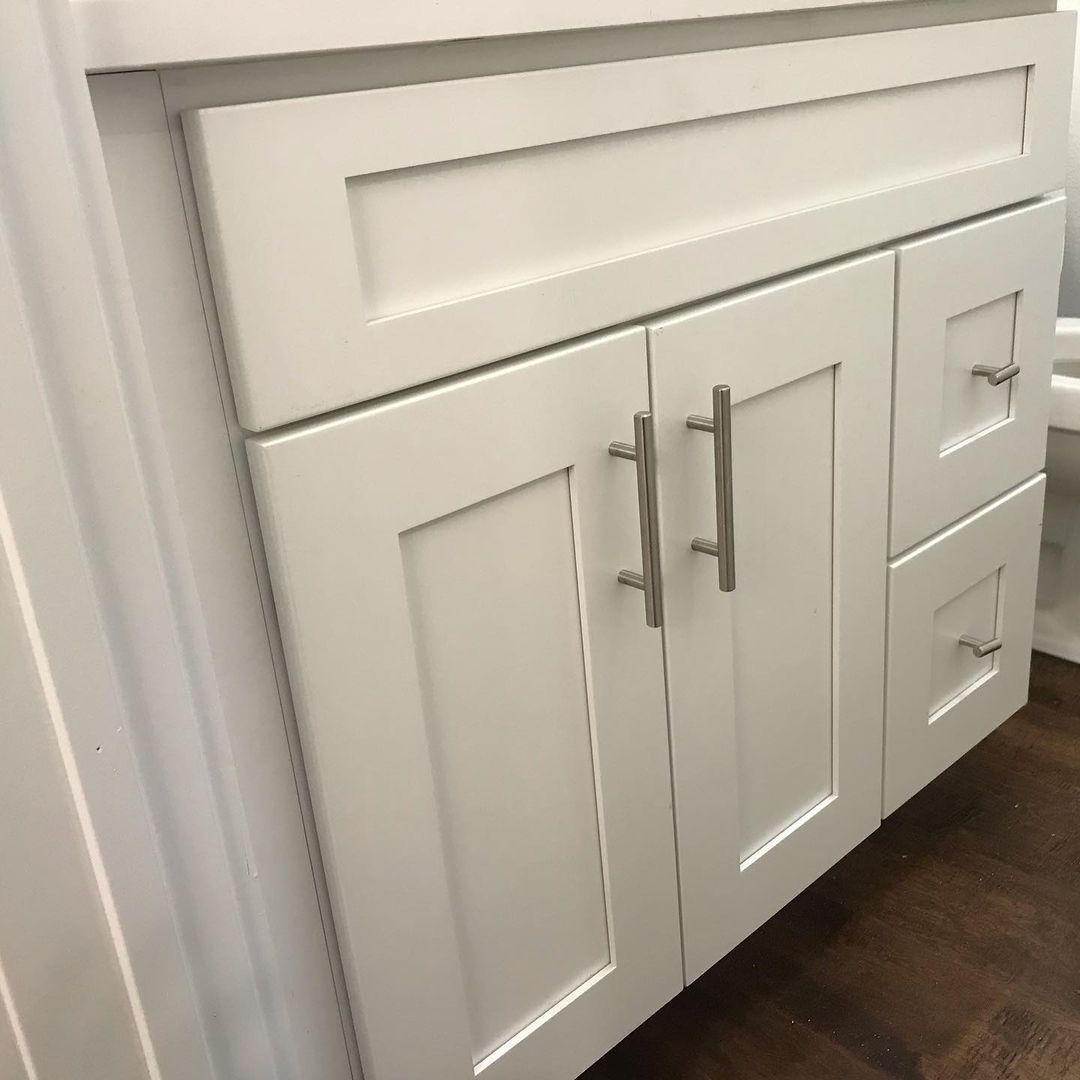
Shaker cabinets have a five-piece door: a square frame around a flat, recessed center panel. Modern flat-panel (slab) cabinets have a one-piece flat door with no frame. Shaker suits traditional, transitional and many modern kitchens and hides small wear at the frame edges; slab doors give the most minimal, contemporary look and are easiest to wipe. In Chicago, shaker remains the more versatile choice for remodels across house styles.
Key takeaways
- Shaker = frame plus recessed flat panel; slab = one flat piece.
- Shaker works in more house styles; slab reads clearly modern.
- Slab doors are easiest to clean; shaker frames collect a little dust in the inside corners.
- Mixing works: shaker on the perimeter with a slab or color island, or slim shaker for a modern-leaning look.
- Preference data is scarce, so choose by the house, the rest of the finishes and the client’s taste, not by a survey.
Understanding Shaker Cabinets
The shaker style comes from the furniture of the Shaker communities: simple, functional and unornamented. A shaker cabinet door has:
- Five pieces: two vertical stiles, two horizontal rails and a flat center panel.
- A recessed panel: the center panel sits behind the face of the frame, creating a shadow line.
- Square inside edges: no decorative profile on the frame.
Common variations include standard shaker, slim or mini shaker with a narrower frame, and shaker with a small bevel on the inside edge. Raised-panel doors differ: their center panel is profiled and raised rather than flat.
Exploring Modern Flat Panel Cabinets
Modern flat-panel cabinets, also called slab doors, are one flat piece with no frame or profile. They are typically made from veneered panels, painted MDF, laminate, thermofoil or high-gloss acrylic, and are common in frameless European-style kitchens.
- Minimal look: no lines except the gaps between doors.
- Easy cleaning: no inside corners.
- Material-driven: the finish (wood grain, gloss, matte color) carries the whole design.
Comparing the Two Styles
| Factor | Shaker | Slab (modern flat panel) |
|---|---|---|
| Look | Clean but classic; frame adds depth | Minimal, contemporary |
| House styles | Traditional, transitional, farmhouse, many modern | Modern, contemporary, minimalist |
| Cleaning | Wipe the inside corners of the frame | Wipe flat; easiest |
| Wear | Frame and panel lines help hide small marks | Large flat surface shows dents and scratches |
| Hardware | Knobs, cup pulls or bar pulls | Bar, edge or no pulls |
1. Aesthetic Appeal
Shaker gives warmth and structure; slab gives calm and minimalism. In Chicago’s mix of bungalows, two-flats, condos and newer homes, shaker usually fits more easily into an existing house, while slab suits modern condos and new builds.
2. Durability and Maintenance
Durability depends on construction and finish more than on style. A well-built five-piece shaker door with a stable MDF panel and a factory finish holds up well; a slab door in a quality veneer or paint does too. Slab doors are easier to wipe; shaker corners need a soft brush or cloth now and then.
3. Cost Considerations
Cost depends on the line, materials and finish, not on the style alone. Compare quotes on the same box construction.
4. Flexibility in Design
Shaker adapts by color and hardware: white with cup pulls reads farmhouse, black with long bar pulls reads modern. Slab is strongest when the rest of the kitchen is equally minimal.
What Chicago Homeowners Prefer
There is no reliable public survey of Chicago cabinet preferences, so be wary of claims that one style is winning. What drives the choice on real projects is the house, the client’s taste and the budget. Practical guidance:
- Older homes and bungalows: shaker or raised panel usually suits the trim and architecture.
- Condos and new construction: shaker in a modern color, slim shaker, or slab.
- Rentals and flips: white or grey shaker is the broadly accepted choice.
Mixing Shaker and Flat-Panel Cabinets
- Shaker perimeter with a contrasting color island for a modern twist.
- Slim shaker doors for a look between classic shaker and slab.
- Keep the same hardware finish and similar door proportions across both styles.
- Avoid mixing styles within the same run; change style at a natural break such as the island.
How to Clean White Shaker Cabinets
- Wipe with a soft cloth dampened with warm water and a little mild detergent.
- Use a soft brush or cloth wrapped around a finger for the inside corners of the frame.
- Dry immediately; do not leave moisture in the corners.
- Avoid abrasive pads and products with silicone or wax.
- Wipe splatters near the range promptly before they set.
Shaker Styles at CCC Cabinets
CCC Cabinets stocks framed, full-overlay cabinets with recessed square doors; it does not stock slab doors. Shaker options include Pure White, Espresso Shaker and Light Grey (flat-panel shaker), Dark Grey (stained flat shaker), Shaker Blue, Black Roast, Matcha Latte and Cappuccino, plus the slim-frame Mini White Shaker and Mini Shaker Cappuccino for a more modern line. Raised-panel options include Millennium White and Millennium Grey. Every style uses MDF center panels in birch or HDF frames on a plywood box; compare all on the cabinet styles page.
Frequently Asked Questions
What is a shaker cabinet?
A shaker cabinet has a five-piece door: four frame pieces around a flat, recessed center panel with square inside edges and no decorative profile. The style comes from simple Shaker furniture and is the most common cabinet door style today because it suits traditional, transitional and many modern kitchens.
What is the difference between shaker and flat-panel cabinets?
Shaker doors have a frame around a recessed flat panel, which creates a visible border and shadow line. Modern flat-panel or slab doors are one flat piece with no frame. Shaker looks more classic and versatile; slab looks more minimal and contemporary and is easier to wipe clean.
Are shaker cabinets out of style?
Shaker cabinets remain widely used because the simple frame adapts to many looks: white and cup pulls for farmhouse, deep colors and bar pulls for modern, stained wood for warm transitional. Changing color and hardware updates the look without changing the door style.
Can you mix shaker and flat-panel cabinets in one kitchen?
Yes. A common approach is shaker cabinets on the perimeter and a different style or color on the island. Keep hardware finishes consistent and change styles at natural breaks rather than within one run, so the mix looks planned.
What is the difference between shaker and raised-panel cabinets?
Both are five-piece doors, but a shaker door has a flat, recessed center panel, while a raised-panel door has a center panel that is profiled and raised toward the face of the frame. Raised panels look more traditional and formal; shaker looks simpler and more versatile.
Conclusion
Shaker and slab doors are both good choices; shaker fits more Chicago homes and remodels, while slab suits fully modern spaces. Choose by the house and the client, then refine with color and hardware. To compare shaker styles in person, visit CCC Cabinets at 2180 S Wolf Rd, Des Plaines, IL 60018 or call (872) 241-5525.
More in Styles & Colors
Sourcing cabinets for a Chicagoland project?
CCC Cabinets supplies 15 door styles — including Pure White cabinets — at wholesale prices from our Des Plaines, IL warehouse. Confirm availability for your door style, then choose warehouse pickup near O’Hare or scheduled delivery across Chicagoland.
Door styles to explore: Pure White · Mini White Shaker · Shaker Blue
Browse all cabinet styles · Open a dealer account · Call (872) 241-5525 · Talk to our team