The Complete Guide to Installing Kitchen Cabinet Hardware: Knobs, Pulls, and Handles
To install cabinet hardware, choose a consistent placement, mark it with a drilling jig or template, drill straight through from the front with a backer block behind the door to prevent tear-out, then fasten from the inside with screws of the right length. On doors, place knobs or pulls on the stile opposite the hinges, near the top corner of base doors and the bottom corner of wall doors; center pulls on drawers.
Key takeaways
- Decide placement rules once and use the same jig on every door and drawer.
- Measure pull size by center-to-center distance between the screw holes.
- Drill from the front with a backer block to avoid splintering the back of the door.
- Check screw length against door and drawer-front thickness before drilling.
- Install hardware after the cabinets are hung and adjusted, so it lines up across runs.
1. Understanding Cabinet Hardware Types
| Type | Description | Typical use |
|---|---|---|
| Knobs | Single screw, round or square | Doors, small drawers |
| Bar and wire pulls | Two screws, sized center-to-center | Drawers, doors, modern kitchens |
| Cup pulls | Hooded pulls | Drawers in traditional kitchens |
| Appliance pulls | Larger, heavier pulls | Panel-ready appliances, tall pantry doors |
| Edge or tab pulls | Mount on the top or back edge | Minimal modern looks |
2. Selecting the Right Hardware
2.1 Style and Design
Match hardware to the door style. Slim bar pulls suit modern and Shaker kitchens; cup pulls and knobs suit traditional raised panels such as those in our modern cabinetry and classic collections.
2.2 Size and Scale
Pulls are sized by the distance between screw holes (center-to-center). A common designer rule of thumb is to choose drawer pulls roughly one-third of the drawer width, and to use larger pulls or two pulls on very wide drawers. Keep sizes consistent across the kitchen.
2.3 Finish and Material
- Matte black: crisp contrast on white, grey and green cabinets.
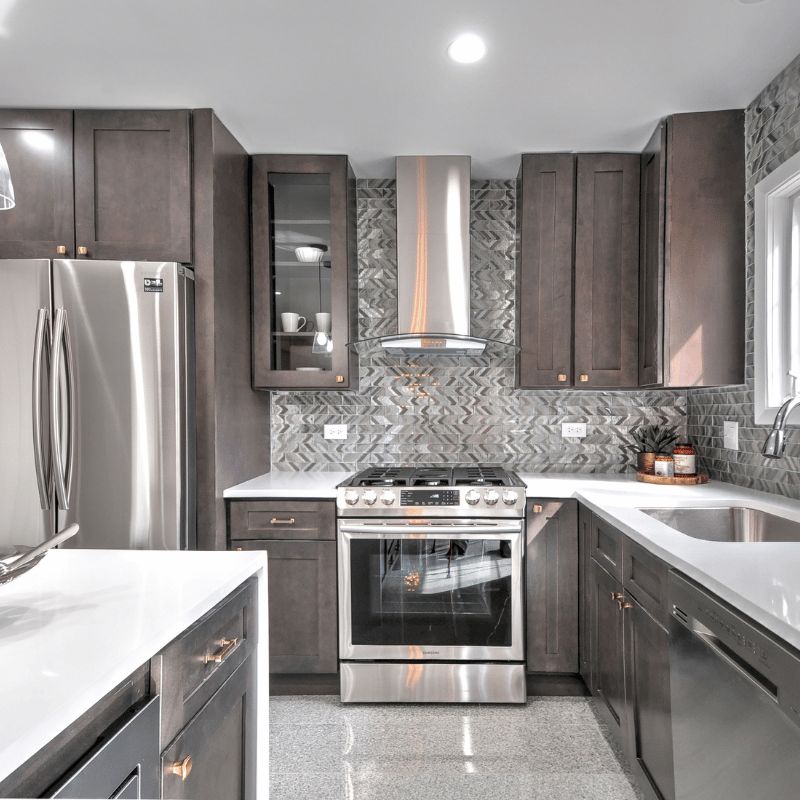
- Brass and gold tones: warm up navy, black and wood finishes.
- Nickel and chrome: classic and quiet.
- Bronze: traditional and rustic.
Standard placement guidelines
| Location | Common placement | Tip |
|---|---|---|
| Base cabinet doors | On the stile opposite the hinge, near the top corner | Keep the same distance from the top edge on every door |
| Wall cabinet doors | On the stile opposite the hinge, near the bottom corner | Line up with base hardware vertically |
| Drawers | Centered left to right | Center on the drawer front or on the top rail on Shaker drawers |
| Tall pantry doors | Near counter height | Long pulls work well |
On Shaker doors, hardware usually sits on the stile (the vertical frame), centered on its width.
3. Tools and Materials Needed for Installation
- Cabinet hardware jig or template
- Drill-driver and a sharp brad-point bit sized for the screws
- Tape measure, square and pencil or painter’s tape
- Scrap wood backer block and clamp
- Screwdriver for final tightening
- Correct-length screws (often supplied, sometimes too long or short)
4. Step-by-Step Installation Guide
Step 1: Set your placement rules
Decide distances from door edges and drawer centers, and test on one door and one drawer before doing the rest.
Step 2: Set up the jig
Adjust a hardware jig to the pull’s center-to-center spacing and your offsets. A jig keeps every hole consistent and much faster than measuring each piece.
Step 3: Mark and protect
Mark through the jig, or apply painter’s tape first to protect painted finishes and make marks visible.
Step 4: Drill
Clamp a scrap backer block behind the door or drawer front and drill straight through from the front. This prevents tear-out on the inside face.
Step 5: Attach the hardware
Insert screws from the inside and tighten by hand. Do not overtighten, which can damage the finish or strip the hole. On drawers with a separate front, check that screws pass through both the drawer box and front if required.
Step 6: Check alignment
Step back and check that hardware lines up across the run and between base and wall cabinets.
5. Common Mistakes to Avoid
- Measuring every piece by hand instead of using a jig.
- Drilling before cabinets are adjusted: install hardware after doors are aligned.
- Wrong screw length: too long sticks out; too short does not grab.
- No backer block: causes splintering inside doors.
- Placing hardware on the hinge side by mistake on mirrored doors.
- Mixed sizes: inconsistent pull lengths look accidental.
6. Maintenance Tips for Cabinet Hardware
- Clean with a soft cloth and mild detergent; avoid abrasive cleaners.
- Tighten loose screws by hand before they wear the hole.
- Wipe away grease near the range regularly.
Hardware on CCC Cabinets
CCC door styles use full-overlay doors with a 3/4″ birch face frame and 3/4″ door frames on most styles, so plan screw lengths for that thickness. Shaker styles such as Pure White and Shaker Blue take hardware on the stile; drawer fronts mount to 17 mm solid-wood dovetail drawer boxes. Browse door styles in our cabinet collection and choose hardware that suits the profile. For hardware trends, read cabinet hardware trends.
7. Frequently Asked Questions
Where should knobs go on kitchen cabinet doors?
Knobs usually go on the stile opposite the hinges: near the top corner on base cabinet doors and near the bottom corner on wall cabinet doors, so they are easy to reach. Keep the same distance from the door edges on every door so the hardware lines up across the kitchen.
How do you install cabinet hardware without making mistakes?
Use a cabinet hardware jig set to the pull spacing and your offsets, protect finishes with painter’s tape, clamp a backer block behind the door, drill straight from the front and fasten from the inside. Test on one door and one drawer first, and install after the doors are aligned.
What size pulls should I use on drawers?
Pulls are measured center-to-center between screw holes. A common rule of thumb is a pull about one-third of the drawer width, with longer or double pulls on very wide drawers. Keep sizes consistent across drawers of the same width for a clean look.
Can I install hardware on cabinets without pre-drilled holes?
Yes. Most cabinet doors and drawer fronts come without holes so you can choose placement. Use a jig for consistent spacing, drill from the front with a backer block behind to prevent splintering, and confirm screw length against the door thickness before drilling.
Should hardware be installed before or after cabinets are hung?
After. Hang and level the cabinets, adjust the hinges so doors and drawer fronts are aligned, then install the hardware. That way the knobs and pulls line up across the run instead of following any small differences in door position.
Conclusion
Good hardware installation comes down to consistent rules, a jig and careful drilling. For cabinets to pair with your hardware, see wholesale kitchen cabinets from CCC Cabinets, visit the showroom at 2180 S Wolf Rd, Des Plaines, or call (872) 241-5525.
More in Hardware & Function
Sourcing cabinets for a Chicagoland project?
CCC Cabinets supplies 15 door styles — including Shaker Blue cabinets — at wholesale prices from our Des Plaines, IL warehouse. Confirm availability for your door style, then choose warehouse pickup near O’Hare or scheduled delivery across Chicagoland.
Door styles to explore: Shaker Blue · Pure White · Matcha Latte
Browse all cabinet styles · Open a dealer account · Call (872) 241-5525 · Talk to our team