The Complete Guide to Kitchen Cabinet Open Shelving vs. Closed Storage
Closed cabinets win on dust protection, hiding clutter and total storage capacity; open shelving wins on quick access, display and making a small room feel lighter. For most kitchens the best answer is mostly closed cabinets with one short run of open shelves near the sink or range for everyday dishes. The same trade-offs apply to living rooms, offices and small apartments: decide by dust, visual clutter and how often you reach for each item.
Key takeaways
- Closed storage keeps dust and grease off contents and hides mismatched items; open shelves show everything.
- Open shelves suit items you use daily and like to see; closed cabinets suit everything else.
- Open shelves need solid anchoring into studs or blocking, planned before drywall and tile.
- Glass-front cabinets are a middle ground: display with dust protection.
Open shelving vs closed storage at a glance
| Factor | Open shelving | Closed storage |
|---|---|---|
| Dust and grease | Items collect dust, and kitchen grease near the range | Contents stay clean behind doors |
| Visual clutter | Everything is on display; needs curating | Hides mismatched or everyday items |
| Everyday access | Fastest: no doors to open | One extra motion; drawers make access easy |
| Capacity | Less per foot of wall | More, especially with drawers and full-height cabinets |
| Feel of the room | Lighter, more open | Calmer, more uniform |
| Installation | Must anchor into studs or blocking | Standard cabinet installation |
Understanding open shelving
Open shelves are wall-mounted shelves without doors, or cabinets without doors. They make a kitchen feel lighter, keep daily items at hand and give space to display dishes, cookbooks or plants.
Pros of open shelving
- Accessibility: grab plates and glasses without opening doors.
- Visual appeal: a place for attractive dishware and decor.
- Lighter look: breaks up a long run of wall cabinets and can make a small kitchen feel larger.
- Flexibility: easy to rearrange.
Cons of open shelving
- Dust and grease: shelves and items need regular cleaning, especially near the cooktop.
- No concealment: everyday or mismatched items look cluttered.
- Less capacity: a shelf holds less than a cabinet of the same width.
- Upkeep: shelves need to be kept organized to look intentional.
Exploring closed storage options
Closed storage means cabinets with doors or drawers that hide their contents. It gives a clean, uniform look and the most storage per foot of wall.
Pros of closed storage
- Organization: contents stay out of sight, reducing visual clutter.
- Protection: doors keep dust and cooking grease off dishes.
- Capacity: wall cabinets to the ceiling, drawer bases and pull-outs maximize storage.
- Adjustability: adjustable shelves and organizers fit what you own.
Cons of closed storage
- One extra step: doors must be opened, though drawers minimize this.
- Heavier look: long runs of wall cabinets can feel imposing in small rooms.
- Less display: no showcase for decorative pieces unless you add glass doors.
Choosing the right option for your kitchen
- List what you will store: if most of it is everyday, mismatched or bulky, favor closed storage.
- Find the daily zone: a short open run near the dishwasher or sink for everyday plates and glasses works well.
- Keep shelves away from the cooktop: grease and steam settle on open items near the range.
- Check the walls: open shelves need studs or added blocking; plan this before drywall.
- Match finishes: shelves in the same wood tone or color as the cabinets look built-in.
- Consider glass doors: they show off dishware while keeping dust out.
Layout matters too: in a U-shaped kitchen, one leg with open shelves can keep three walls from closing in; see our U-shaped layout guide.
Beyond the kitchen: living rooms, offices and small spaces
The same three questions, dust, visual clutter and everyday use, decide storage in other rooms:
| Space | Usually better | Why |
|---|---|---|
| Pantry | Mostly closed, with open shelves inside a closet | Packaging looks busy; a closed door hides it while shelves inside stay easy to scan |
| TV stand or media wall | Mix: closed for devices and cables, open for a few display pieces | Closed doors hide cables; electronics need ventilation |
| Home office | Closed for supplies and paper, open for books and reference | Supplies look messy and collect dust in the open |
| Small apartment | Mostly closed with one open feature | Too much open storage makes a small room look cluttered |
| Kids’ rooms | Low open shelves for toys and books | Children can see and reach items; anchor all furniture to the wall |
Maintenance tips
- Open shelves: dust weekly, wash items near the range more often, and keep displays edited.
- Closed cabinets: wipe fronts with a soft cloth, mild detergent and warm water; avoid silicone or wax products; adjust hinges if doors drift.
- Both: keep them dry and do not overload shelves; plywood shelves resist sag better than thin particleboard.
How CCC Cabinets fits
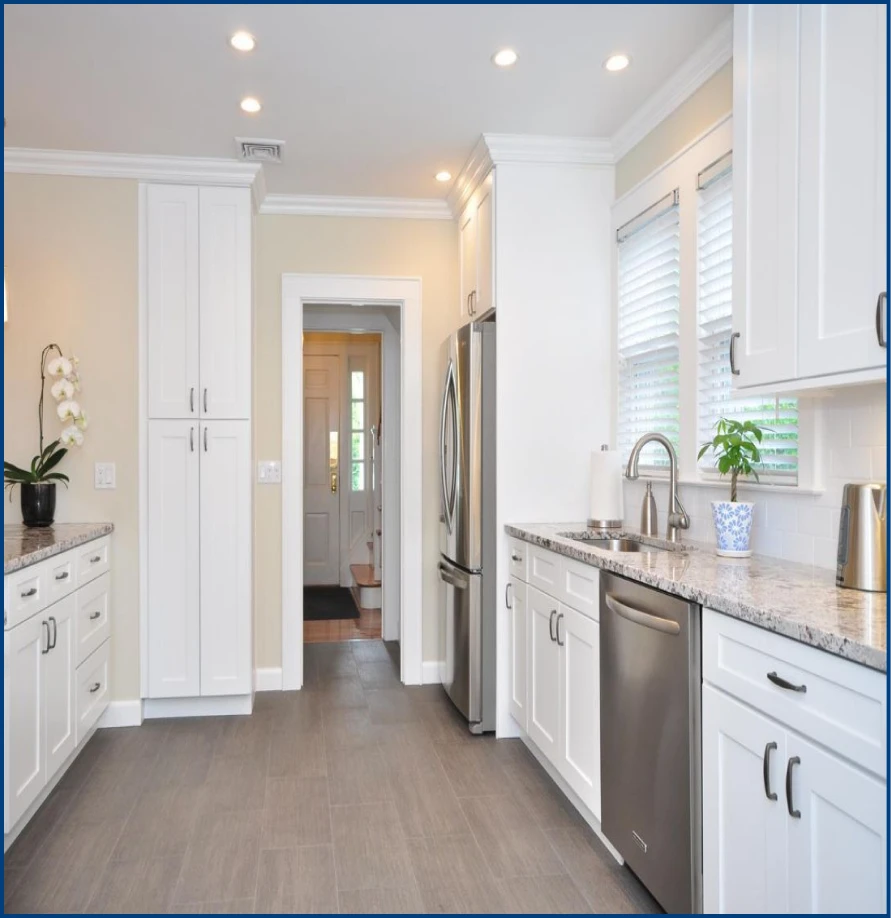
CCC Cabinets stocks 15 door styles for the closed-storage side of the kitchen, all built with 1/2-inch A-grade plywood boxes, 3/4-inch plywood adjustable shelves, 3/4-inch birch face frames, MDF door center panels, 17 mm solid wood dovetail drawers and soft-close hardware. Light shaker styles such as Pure White keep a kitchen bright next to open shelves, while warm stained styles such as Cappuccino Shaker pair naturally with wood shelving. Learn more about construction in our cabinet materials guide and browse in-stock cabinets.
Frequently Asked Questions
Is open shelving or closed storage better for dust?
Closed storage is better for dust. Doors keep dust, pet hair and cooking grease off dishes and supplies, while items on open shelves need regular cleaning. If you want open shelving, keep it for items you use and wash often, and keep it away from the cooktop.
How do I keep open shelves in a small space from looking messy?
Limit open shelving to one short run, store only items that look good together, group by color or material, leave some empty space on each shelf and keep everyday clutter behind closed doors. A matching finish between shelves and cabinets also helps the shelves look built-in.
Which is better for a pantry, open or closed storage?
Mostly closed. Food packaging looks busy and collects dust, so a pantry closet with a door, or closed pantry cabinets, works best. Inside the closet, open shelves or pull-outs make it easy to see and reach everything.
Should a TV stand or living room unit have open shelving or closed cabinets?
A mix usually works best: closed cabinets for devices, cables, games and remotes, and a few open shelves for books or decor. Make sure enclosed electronics have ventilation, and anchor tall units to the wall.
Is open shelving or closed storage better for a home office?
Use closed storage for supplies, paper and anything that looks cluttered, and open shelves for books and reference items you use often. Closed storage also keeps dust off printers and paper stock.
Are open kitchen shelves cheaper than cabinets?
Often, per foot of wall, because shelves use less material than cabinets with doors. They also hold less, may need wall blocking and extra installation work, and leave items exposed to dust, so compare cost against the storage you actually need.
Conclusion
Open shelving and closed storage each have a place. Use closed cabinets for most storage and open shelves for a small, curated set of everyday items, and plan anchoring and finishes before installation. To see stocked cabinet styles in person, visit the CCC Cabinets showroom at 2180 S Wolf Rd, Des Plaines, call (872) 241-5525, or contact us.
More in Hardware & Function
Sourcing cabinets for a Chicagoland project?
CCC Cabinets supplies 15 door styles — including Cappuccino cabinets — at wholesale prices from our Des Plaines, IL warehouse. Confirm availability for your door style, then choose warehouse pickup near O’Hare or scheduled delivery across Chicagoland.
Door styles to explore: Cappuccino · Pure White · Mini White Shaker
Browse all cabinet styles · Open a dealer account · Call (872) 241-5525 · Talk to our team