The Complete Guide to Cabinet Industry Terminology Every Buyer Should Understand
Cabinet terminology falls into a few groups: cabinet types (base, wall, tall), materials (plywood, MDF, particleboard, veneer), construction (face frame, frameless, overlay, dovetail), finishes and hardware, measurements, catalog codes such as B15 or W3030, and installation and ordering terms. This glossary defines each in plain language so quotes, catalogs and supplier conversations make sense.
Key takeaways
- Most cabinet codes combine a type letter with width and, for wall cabinets, height in inches: B15, SB36, W3030.
- Box material, drawer joinery and hinge type say more about quality than the door style does.
- Overlay (full, half, inset) describes how the door sits on the cabinet and determines the hinges.
- Codes and spec wording vary by manufacturer; always read the specific catalog before ordering.
1. Cabinet Types
| Term | Meaning |
|---|---|
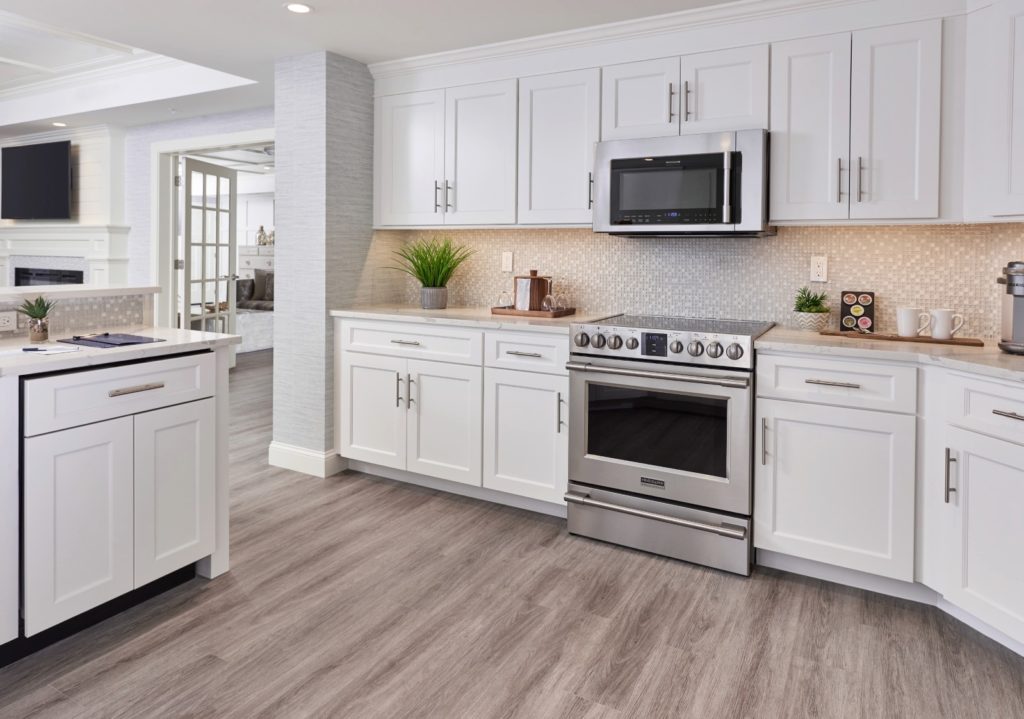
| Base cabinet | Sits on the floor and supports the countertop; may have doors, drawers or both. |
| Wall cabinet | Hangs on the wall above the countertop; also called upper cabinet. |
| Tall cabinet | Runs from floor to near the ceiling; used as a pantry, broom closet or oven or utility cabinet. |
| Sink base | Base cabinet with an open interior and false drawer front for the sink and plumbing. |
| Drawer base | Base cabinet made entirely of drawers, usually three or four. |
| Blind corner cabinet | Corner cabinet where part of the box is hidden behind the adjoining run. |
| Lazy Susan | Corner base cabinet with rotating shelves. |
| Diagonal corner | Corner cabinet set at an angle, common for wall cabinets. |
| Vanity | Bathroom base cabinet, usually lower and shallower than a kitchen base. |
| Specialty cabinet | Microwave, oven, refrigerator, wine rack or appliance garage units. |
2. Material Terminology
| Term | Meaning |
|---|---|
| Solid wood | Lumber sawn from a tree, used mainly for face frames, door frames and drawer boxes. |
| Plywood | Thin wood layers glued with alternating grain; strong, holds screws well and resists sagging. Grades (for example A-grade) describe face quality. |
| MDF (medium-density fiberboard) | Fine wood fibers pressed with resin into a smooth, stable panel; common for painted door center panels. |
| HDF (high-density fiberboard) | Denser fiberboard, sometimes used for door frames or drawer bottoms. |
| Particleboard | Wood chips pressed with resin; economical but weaker at fasteners and vulnerable to water. |
| Engineered wood | General term for panels made from wood plus adhesive: plywood, MDF, HDF, particleboard. |
| Veneer | Thin slice of real wood glued over a core panel for the look of solid wood. |
| Laminate / thermofoil | Synthetic surface layers applied over MDF or particleboard. |
| Species | The type of wood: birch, maple, oak, cherry and so on. |
For a comparison of box materials, see our plywood vs MDF vs particleboard guide.
3. Cabinet Construction
| Term | Meaning |
|---|---|
| Box (carcass, case) | The cabinet body: sides, top, bottom and back. |
| Face frame | Solid wood frame on the front of the box; doors mount to it. |
| Framed cabinets | Cabinets built with a face frame, the traditional American style. |
| Frameless cabinets | Also called European or full-access cabinets; no face frame, doors mount to the box sides. |
| Stile and rail | Vertical (stile) and horizontal (rail) pieces of a face frame or door frame. |
| Full overlay | Door covers almost the entire face frame, leaving narrow gaps. |
| Half (partial) overlay | Door covers part of the frame, leaving more frame visible. |
| Inset | Door sits inside the frame opening, flush with the face. |
| Dovetail joint | Interlocking joint used at drawer box corners; strong and resists pulling apart. |
| Dado / tongue-and-groove | Grooves that receive a panel or mating edge for a stronger joint. |
| Rabbet | A step cut along an edge so two parts fit together. |
| Corner blocks / braces | Reinforcements at the box corners that keep it square. |
| Soft-close mechanism | Damper in hinges or drawer glides that slows doors and drawers so they close quietly. |
| Full-extension glides | Drawer slides that let the drawer open its full depth. |
| Undermount glides | Drawer slides mounted under the drawer box, hidden from view. |
More on frames: frameless vs face-frame cabinets.
4. Finishing and Hardware
| Term | Meaning |
|---|---|
| Finish | Surface treatment of the cabinet: paint, stain, glaze and protective topcoat. |
| Painted finish | Opaque color that hides the grain; seasonal wood movement can show as fine lines at door joints. |
| Stained finish | Translucent color that shows the wood grain. |
| Glazing | Thin translucent layer over a base color that adds depth, often in recesses. |
| Distressed | Finish deliberately worn for a rustic look. |
| Cabinet hardware | Knobs, pulls, hinges, glides and other functional parts. |
| Concealed (European) hinge | Hinge hidden inside the cabinet when the door is closed; usually adjustable. |
| 6-way adjustable hinge | A hinge that adjusts in three directions (side, height, depth), each both ways. |
| Center-to-center | The spacing between a pull’s screw holes; needed when replacing hardware. |
See the cabinet hinge types guide for hinge details.
5. Design Styles
| Term | Meaning |
|---|---|
| Shaker | Five-piece door with a recessed flat center panel and square frame. |
| Mini shaker / slim shaker | Shaker door with a narrower frame for a lighter look. |
| Raised panel | Door whose center panel is raised with beveled edges. |
| Slab (flat panel) | One-piece flat door without a frame; typical of modern kitchens. |
| Modern | Clean lines and minimal ornament. |
| Traditional | Raised panels, moldings and richer detailing. |
| Transitional | Mix of traditional and modern, often shaker doors with simple hardware. |
| Rustic | Distressed finishes or reclaimed wood for a casual look. |
6. Measurements and Specifications
| Term | Meaning and common standard |
|---|---|
| Base cabinet height | Typically 34-1/2″ without countertop, bringing the counter to about 36″. |
| Cabinet depth | Base cabinets are typically 24″ deep; wall cabinets typically 12″. |
| Cabinet height | Wall cabinets come in several heights, commonly from 30″ to 42″ for full uppers, with shorter units over ranges and refrigerators. |
| Width | Standard widths step in 3″ increments in most lines. |
| Rough opening | The framed or finished opening the cabinets must fit in. |
| Reveal | The visible gap or frame showing around a door. |
| Scribe | Trimming a panel or filler to follow an uneven wall. |
| Toe kick | Recessed space at the bottom of a base cabinet for your feet. |
Cabinet Codes and Abbreviations
Catalogs use short codes so a whole kitchen fits on one order form. Conventions vary by manufacturer, but these are typical:
| Code | Typical meaning |
|---|---|
| B15 | Base cabinet, 15″ wide |
| SB36 | Sink base, 36″ wide |
| DB18 or 3DB18 | Drawer base, 18″ wide (the leading number may give the drawer count) |
| BBC / BLB | Blind base corner cabinet |
| LS / LSB | Lazy Susan base |
| W3030 | Wall cabinet, 30″ wide by 30″ high |
| WDC | Wall diagonal corner cabinet |
| WBC | Wall blind corner cabinet |
| T, U or PC | Tall, utility or pantry cabinet |
| VB / VSB | Vanity base / vanity sink base |
| F, WF, BF | Filler strip (wall or base) |
| TK | Toe kick |
| CM, OM, SM | Crown molding, outside corner molding, scribe molding |
Always confirm codes against the specific supplier’s catalog and order form before submitting an order.
7. Installation Terms
| Term | Meaning |
|---|---|
| Leveling | Setting cabinets level and plumb so doors, drawers and countertops line up. |
| Shimming | Using thin wedges to adjust cabinet height or angle on uneven floors and walls. |
| High point | The highest spot of the floor, where base cabinet layout starts. |
| Ledger board | Temporary board screwed to the wall to support wall cabinets during install. |
| Filler | Strip used to close gaps between cabinets and walls or appliances. |
| Fastening into studs | Screwing cabinets through the back rail into wall framing, never just drywall. |
| Backsplash | Wall surface between countertop and wall cabinets that protects against water and splashes. |
| Punch list | Final list of fixes and adjustments before a job is complete. |
Buying and Ordering Terms
| Term | Meaning |
|---|---|
| Stock / semi-custom / custom | Cabinet tiers: standard sizes in stock, standard boxes with options, or built to order. |
| RTA (ready-to-assemble) | Cabinets shipped flat for assembly on site. |
| Pre-assembled | Cabinets delivered already built. |
| Trade account | Wholesale account for contractors, builders and dealers that gives access to trade pricing. |
| Takeoff | Counting every cabinet and part from the plans to build the order. |
| Lead time | Time between confirmed order and availability. |
| Modification | Change to a standard cabinet, such as reduced depth; usually extra cost and not returnable. |
| Resale certificate | Document that lets a reseller buy without paying sales tax. |
| Freight claim | Report of damage found at delivery, usually required before signing. |
Ready to buy at trade pricing? Read what a cabinet trade account is or apply for a trade account to buy wholesale cabinets in Illinois.
Reading a Cabinet Spec Sheet: A Worked Example
Here is how the CCC Cabinets catalog specification translates into the terms above:
- “Full overlay, recessed square door profile”: shaker-style doors that cover most of the face frame.
- “3/4″ birch face frame”: a solid hardwood frame on the front of each box.
- “1/2″ A-grade plywood with wood veneer” sides: a plywood box, top-grade face, with a wood veneer surface.
- “1/2″ full plywood back”: a full plywood back panel rather than a thin hardboard back.
- “3/4″ A-grade plywood adjustable shelves”: thick shelves that resist sagging, set on adjustable supports.
- “17 mm solid wood dovetail drawer box”: drawer sides of solid wood joined with dovetails.
- “1-1/4″ concealed 6-way adjustable soft-close hinges”: hidden hinges that close softly and adjust in three directions.
- “MDF door center panel”: the recessed panel is MDF, which stays flat under paint.
The same specification applies to all 15 styles in the kitchen cabinets in Chicago collection, from Pure White to Millennium Grey.
8. Frequently Asked Questions
What does B15 mean on a cabinet order?
B15 typically means a base cabinet 15 inches wide. Most catalogs combine a type code with the width, and for wall cabinets the width followed by the height, so W3030 is a wall cabinet 30 inches wide and 30 inches high. Codes vary by manufacturer, so check the supplier’s catalog.
What is the difference between framed and frameless cabinets?
Framed cabinets have a solid wood face frame on the front of the box that the doors attach to. Frameless cabinets have no face frame; doors mount directly to the box sides, giving slightly wider openings and a flatter modern look. Each uses different hinges.
What does full overlay mean?
Full overlay means the doors and drawer fronts cover almost the entire face frame, leaving only small gaps between them. It gives a clean, continuous look. Half overlay leaves more frame visible, and inset doors sit inside the frame flush with the face.
What is a filler in kitchen cabinets?
A filler is a strip, usually finished to match the cabinets, used to close gaps between a cabinet and a wall, appliance or corner. Fillers let standard-width cabinets fit an exact wall length and give doors and drawers room to open past handles and trim.
What does RTA mean for cabinets?
RTA stands for ready-to-assemble. The cabinets ship flat in boxes and are assembled before installation. RTA reduces freight volume and is often available sooner, while pre-assembled cabinets arrive built and save time on site.
What are the benefits of plywood box cabinets?
Plywood boxes are strong and stable, hold screws well and resist sagging and moisture better than particleboard. That makes them a good choice for sink bases, heavy dish storage and rental units that see hard use.
How should I clean and maintain kitchen cabinets?
Wipe with a soft cloth, mild detergent and warm water, then dry. Avoid harsh chemicals and silicone or wax products, which can damage finishes. Wipe up spills promptly, fix leaks under sinks quickly, and adjust hinges if doors shift with the seasons.
Talk to a Cabinet Supplier Who Speaks Your Language
Questions about a spec sheet or order form? Call CCC Cabinets at (872) 241-5525 or visit the showroom at 2180 S Wolf Rd in Des Plaines to see all 15 door styles in person.
More in Cabinetry
Sourcing cabinets for a Chicagoland project?
CCC Cabinets supplies 15 door styles — including Mini White Shaker cabinets — at wholesale prices from our Des Plaines, IL warehouse. Confirm availability for your door style, then choose warehouse pickup near O’Hare or scheduled delivery across Chicagoland.
Door styles to explore: Mini White Shaker · Pure White · Millennium Grey
Browse all cabinet styles · Open a dealer account · Call (872) 241-5525 · Talk to our team