The Complete Guide to Burgundy and Wine-Toned Kitchen Cabinet Design
Burgundy kitchen cabinets work best as a deliberate accent: on an island, a run of lower cabinets or a bar wall, balanced with a light neutral, warm wood and brass or black hardware. Choose the shade by undertone (brown-red reads warmer and more traditional; blue-red reads cooler and more modern), test it on a full sample in your own light, and use a durable matte or satin finish.
Key takeaways
- Burgundy is strongest in one zone: an island, lower cabinets or a beverage wall, with lighter upper cabinets or open walls.
- Pick the undertone first: brown-leaning wine shades pair with warm wood and brass; blue-leaning shades pair with grey, white and nickel.
- Dark painted cabinets show dust and scratches more than mid-tones; plan for a quality finish and touch-up paint.
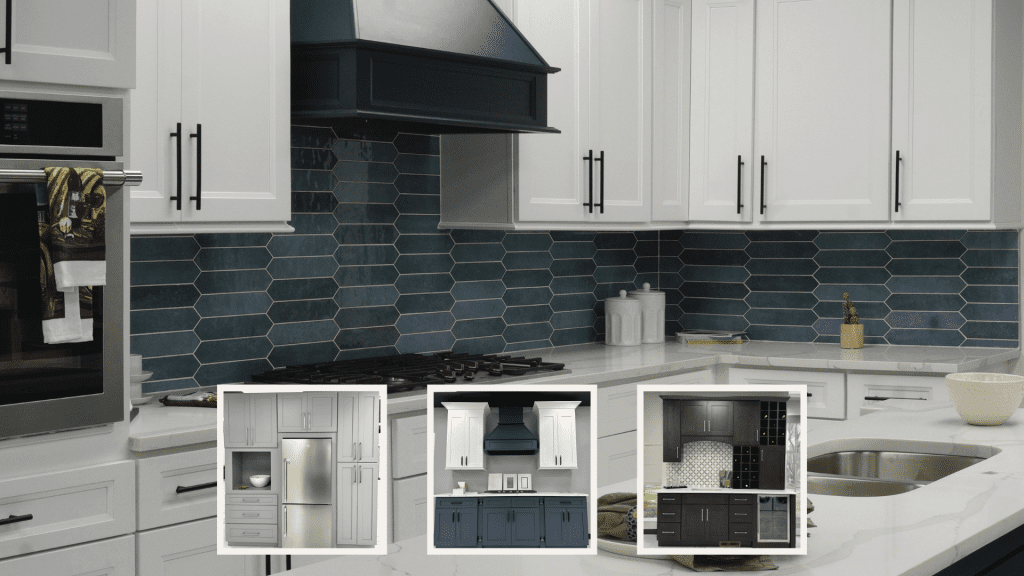
- CCC Cabinets does not stock a burgundy door. Its navy, black, sage and warm stained styles pair well with burgundy accents.
Understanding burgundy and wine tones
Burgundy is a deep red named after the wine of France’s Burgundy region. In cabinetry the name covers a family of colors, from brown-red oxblood to purple-leaning merlot. Those undertones decide what the color pairs with:
| Shade family | Undertone | Pairs best with |
|---|---|---|
| Oxblood, brick wine | Brown-red | Warm wood, cream, brass, terracotta tile |
| Classic burgundy | Balanced red | White, warm grey, gold or black hardware |
| Merlot, plum wine | Blue or purple-red | Cool grey, crisp white, nickel, marble-look quartz |
Warm and cool lighting change all three. Warm white bulbs push burgundy toward brown; cooler bulbs push it toward purple. Test samples under the light fixtures you will actually use.
Benefits and trade-offs of burgundy kitchen cabinets
- Character: burgundy gives a kitchen a distinct identity that white and grey cannot.
- Warmth: deep red tones make a kitchen feel cozy, especially with wood and warm lighting.
- Versatile pairing: burgundy works with neutrals, greens, navy and natural wood.
- Trade-off, resale: a bold color narrows appeal; keeping burgundy to an island or a single zone is easier to live with and to change later.
- Trade-off, upkeep: dark painted finishes show dust, fingerprints and edge chips more than mid-tones.
Designing with wine tones: complementary colors
When incorporating burgundy cabinets into your kitchen, plan the supporting colors as carefully as the cabinet color:
| Pairing | Effect | How to use it |
|---|---|---|
| Soft neutrals (cream, beige, light grey) | Balances the intensity of burgundy | Upper cabinets, walls or a white perimeter around a burgundy island |
| Deep greens (olive, forest, sage) | Rich, earthy palette | One green element at most, such as tile or a pantry wall |
| Navy blue | Classic, moody contrast | Navy perimeter with a burgundy accent, or the reverse |
| Metallic accents | Brass and gold read warm; black reads modern; nickel reads cool | Match hardware to the burgundy undertone |
| Warm woods | Softens the red and adds texture | Open shelves, butcher-block island top, stained cabinets nearby |
Color matching tips
Always test samples in your kitchen’s light at different times of day, and look at them next to the countertop and flooring samples, not on a white wall. A full painted door tells you far more than a chip; see our post on choosing colors with full door samples.
Selecting the right cabinet style
The door profile changes how burgundy reads:
- Shaker cabinets: the simple recessed panel keeps a bold color calm; the most versatile choice for modern or traditional kitchens.
- Raised panel cabinets: add depth and shadow lines, which make burgundy look richer and more traditional.
- Flat-panel (slab) cabinets: give a sleek, contemporary look, best in a satin finish with minimal hardware.
Where to use burgundy in the kitchen
- Island only: the most popular and least risky option; keep the perimeter white, cream or light grey.
- Lower cabinets: burgundy bases with light uppers ground the room without darkening it.
- Bar or beverage wall: a wine color fits a wine or coffee station naturally.
- Butler’s pantry or mudroom: a separate room can carry a bolder color than the main kitchen.
- Full kitchen: works in large, bright rooms; pair with light counters and plenty of lighting.
Incorporating burgundy cabinets into various kitchen styles
Modern kitchens
Pair slab or slim shaker doors in a blue-leaning wine shade with white quartz, stainless steel appliances and black or nickel hardware.
Traditional kitchens
Use raised panel or shaker doors in a brown-leaning burgundy with cream counters, classic crown molding and brass hardware.
Farmhouse and transitional kitchens
Combine a burgundy island with white or cream shaker perimeter cabinets, wood open shelving and simple bar pulls. Our transitional cabinet design guide covers the balance of classic and modern details.
Countertops, backsplash and hardware
- Countertops: white or cream quartz, marble-look surfaces and butcher block all balance burgundy; busy dark granite usually competes with it.
- Backsplash: white, cream or warm-white tile keeps the cabinets the focus; zellige-style or handmade-look tile adds texture without more color.
- Hardware: brass and gold for warm shades, matte black for contrast, nickel for cool shades. Size pulls to the drawer width; see our guide to choosing cabinet hardware size.
- Lighting: under-cabinet lighting keeps dark lower cabinets from feeling heavy.
Maintenance and care for burgundy cabinets
- Wipe surfaces regularly with a soft cloth, mild detergent and warm water to remove dust and grime.
- Avoid abrasive cleaners and scrubbing pads, which dull dark finishes.
- Avoid silicone or wax products, which leave residue that shows on deep colors.
- Keep cabinets dry; wipe up spills near the sink and dishwasher.
- Keep the exact paint color and sheen on file for touch-ups.
Getting burgundy cabinets: options and how CCC fits
Burgundy is a specialty color, and most stocked cabinet lines do not carry it. There are three common routes: choose a cabinet line that offers a burgundy or custom paint finish; have existing cabinets professionally refinished; or keep stocked cabinets in a complementary color and bring burgundy in through the island, tile, walls or seating.
CCC Cabinets does not stock a burgundy door. Its 15 in-stock styles include colors that pair well with wine tones: deep navy Shaker Blue and Millennium Blue, deep black Black Roast, soft sage Matcha Latte, cream Millennium Off White, and warm stained Cappuccino Shaker and Espresso Shaker. Every style uses plywood boxes, birch face frames, MDF door center panels and soft-close hardware. Note that CCC’s warranty excludes modified cabinets, so repainting a factory finish affects coverage. See every style on the cabinets page.
Frequently Asked Questions
What colors go with burgundy kitchen cabinets?
Soft neutrals such as cream, beige and light grey balance burgundy best. Navy and deep green add a moody contrast, warm wood tones soften the red, and brass, black or nickel hardware should follow the shade’s undertone: brass for brown-red, nickel for blue-red, black for contrast with either.
Are burgundy kitchen cabinets a good idea?
They are a good idea when used deliberately. Burgundy on an island, lower cabinets or a bar wall adds warmth and character while keeping the kitchen easy to live with. A full burgundy kitchen suits large, bright rooms. Because bold colors narrow resale appeal, limit burgundy to one zone if you may sell soon.
What countertop goes with burgundy cabinets?
White or cream quartz, marble-look surfaces and butcher block work best because they balance the deep red. Light, quiet patterns keep the cabinets as the focal point, while busy dark granite tends to compete with burgundy and make the kitchen feel heavy.
Do burgundy and blue work together in a kitchen?
Yes. Navy and burgundy are a classic pairing. Use one as the main cabinet color and the other as an accent, such as a navy perimeter with a burgundy island or burgundy tile, and tie them together with white or cream counters and brass or black hardware.
What hardware looks best on burgundy cabinets?
Brass and gold suit warm, brown-leaning burgundy; polished or brushed nickel suits cooler, purple-leaning wine shades; matte black gives a modern contrast with either. Keep one hardware finish across the cabinets and size pulls to the drawer width.
Does CCC Cabinets sell burgundy cabinets?
No. CCC Cabinets stocks 15 door styles and none is burgundy. Its navy, black, sage, cream and warm stained styles pair well with burgundy accents such as tile, wall color or an island from a line that offers the color.
Bringing wine tones into your kitchen
Burgundy and wine-toned cabinets add depth and warmth when the shade, the zone and the supporting colors are chosen together. To see complementary navy, black, sage and warm wood styles in person, visit the CCC Cabinets showroom at 2180 S Wolf Rd, Des Plaines, call (872) 241-5525, or contact us.
More in Kitchen Design
Sourcing cabinets for a Chicagoland project?
CCC Cabinets supplies 15 door styles — including Millennium Off White cabinets — at wholesale prices from our Des Plaines, IL warehouse. Confirm availability for your door style, then choose warehouse pickup near O’Hare or scheduled delivery across Chicagoland.
Door styles to explore: Millennium Off White · Shaker Blue · Matcha Latte
Browse all cabinet styles · Open a dealer account · Call (872) 241-5525 · Talk to our team