
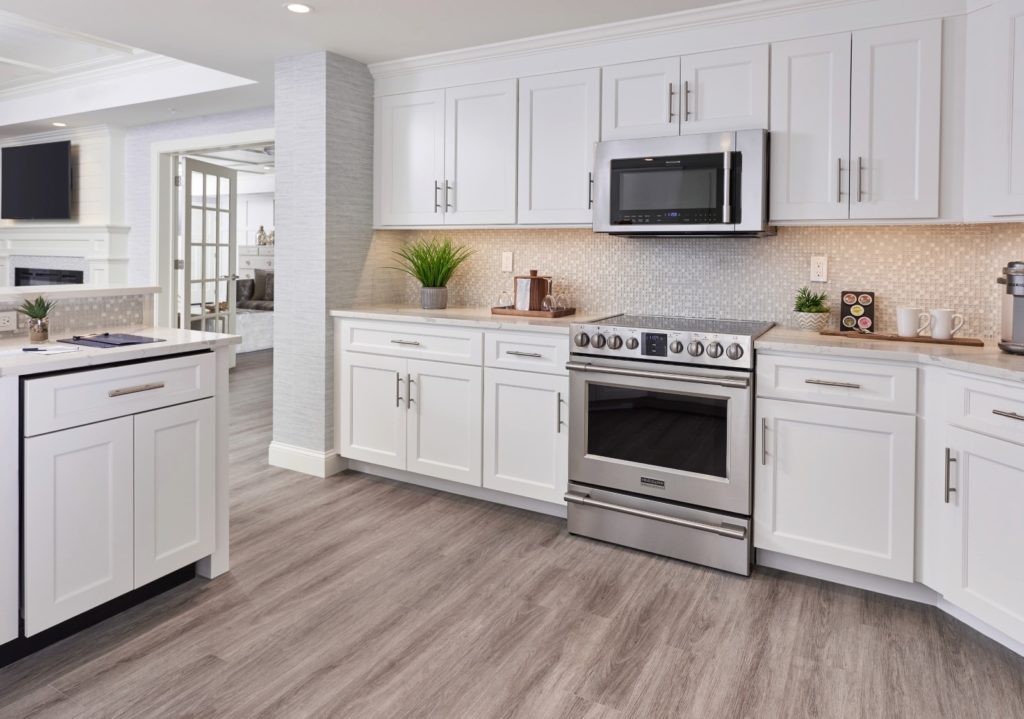
Why KCMA Certification Indicates Cabinets Meet Rigorous Performance Standards
KCMA certification means a cabinet line has passed the Kitchen Cabinet Manufacturers Association’s A161.1 quality testing, which checks structural strength, door and drawer integrity and finish durability through a series of tests that includes a 600-pound load test. It is a third-party performance check, so it is a useful way to compare lines, as long as you confirm the specific line in KCMA’s certified company directory.
Key takeaways
- KCMA is a non-profit association, founded in 1955, that represents cabinet manufacturers and sets standards for the industry.
- The A161.1 Quality Certification tests the cabinet’s structure, doors, drawers and finish to simulate years of use.
- KCMA also runs an Environmental Stewardship Program and a Severe Use certification for high-wear settings such as apartment kitchens.
- Certification is not automatic: KCMA reports that a large share of cabinets fail their first certification attempt.
- Always verify the claim in KCMA’s online directory, and still check construction, warranty and supplier support yourself.
What is KCMA Certification?
The Kitchen Cabinet Manufacturers Association describes itself as a non-profit organization founded in 1955 to represent companies that manufacture kitchen, bath and other residential cabinets, along with key industry suppliers. KCMA establishes and promotes standards for the cabinet industry and runs certification programs based on them.
According to the KCMA certification program, certified cabinets have “passed rigorous tests of their structural strength, drawer and door integrity, and finish durability.” KCMA states that certified cabinets have passed 14 tests, including a 600-pound load test, to simulate a lifetime of use, and that between 40% and 50% of cabinets fail their first certification attempt. Certification is verified by a third party rather than self-declared.
KCMA runs three certification seals:
- Quality Certification (A161.1): performance testing of structure, doors, drawers and finish.
- Environmental Stewardship Program (ESP): certifies manufacturers that follow KCMA’s sustainability practices.
- Severe Use Certification: originally developed by the U.S. Department of Housing and Urban Development (HUD) for cabinets that face the very high wear of apartment-building kitchens.
The Importance of KCMA Certification
For contractors and builders, KCMA certification is useful because it is independent evidence, not a marketing claim.
1. Independent evidence of performance
Cabinets that carry the seal have been tested against a published standard and verified by a third party. When comparing suppliers, ask for the certification for the specific cabinet line you plan to buy, and check it in the directory.
2. A common yardstick between lines
Two quotes can describe cabinets in very different terms. A shared standard lets you compare lines from different manufacturers on the same basis before you look at style and price.
3. A fit for demanding projects
Multi-family and rental projects put cabinets through heavy use. The Severe Use certification was created for exactly that setting, so it is worth asking about for apartment work.
KCMA Performance Standards Explained
KCMA’s public pages describe the quality testing in four areas. The full test procedures are in the A161.1 standard itself.
| Area tested | What it shows | What to check yourself |
|---|---|---|
| Structure | The cabinet holds load and stays intact under heavy use | Box material, back panel, shelf thickness, corner blocks |
| Doors | Doors and hinges keep working after repeated use | Hinge type and adjustability, door frame material |
| Drawers | Drawers and glides keep operating under load and repeated cycles | Drawer box joinery, bottom material, glide type |
| Finish | The finish resists the conditions of a working kitchen | Finish process, edge coverage, interior finish |
Certification tests a sample of the product line; it does not inspect the cabinets delivered to your job. Inspect every box on delivery as usual.
Advantages of KCMA-Certified Cabinets
- Reliability: lines that passed independent testing are less likely to fail early under normal use.
- Easier specification: architects and developers can write “KCMA certified” into a spec as a minimum performance level.
- Environmental documentation: manufacturers in the Environmental Stewardship Program can document their sustainability practices.
- Multi-family fit: Severe Use certification gives a defined standard for high-wear apartment kitchens.
What certification does not tell you: the warranty terms, how a supplier handles damaged or missing parts, delivery reliability or how the finish color looks in your space. Check those separately.
Certification is not the only quality signal
Not every well-built cabinet line is certified, and certification does not describe every construction detail. Use it alongside a hands-on check:
- Plywood box sides and back, and thick plywood shelves
- Solid-wood dovetail drawer boxes on full-extension soft-close glides
- Concealed, multi-way adjustable soft-close hinges
- Solid hardwood face frames
- An even factory finish on faces, edges and interiors
- A written warranty with clear coverage and exclusions
For other testing and labeling programs, see our guides to cabinet quality testing standards and cabinet material certifications.
How to Choose KCMA-Certified Cabinets
- Research: ask each manufacturer or supplier whether the specific line you are quoting is certified, and which seal it carries.
- Verify: look the company up in the KCMA certified company directory, which can be filtered by certification type.
- Assess your needs: for apartments and rentals, ask about Severe Use; for green building programs, ask about Environmental Stewardship.
- Visit a showroom: open doors and pull drawers yourself. In the Chicago area you can see our cabinets at our Des Plaines showroom.
- Review warranty and support: read the written warranty and ask how damaged or missing pieces are replaced.
How to evaluate CCC Cabinets
CCC Cabinets is a supplier of wholesale kitchen cabinets in the Chicago area. When you evaluate our line, or any other, ask about certification for the specific line and check our published construction against the list above. All 15 CCC door styles share the same box: 1/2″ A-grade plywood sides with wood veneer, a 1/2″ full plywood back, 3/4″ A-grade plywood shelves, a 3/4″ birch face frame, 17 mm solid-wood dovetail drawer boxes on full-extension soft-close glides and 1-1/4″ concealed 6-way adjustable soft-close hinges. Cabinets carry a 5-year limited warranty on materials and workmanship and a 2-year limited warranty on painted finishes; see the warranty for terms. Popular styles for multi-unit work include Pure White and Light Grey.
Frequently Asked Questions
What does KCMA certification mean?
KCMA certification means a cabinet line has passed the Kitchen Cabinet Manufacturers Association’s A161.1 quality testing, which checks structural strength, door and drawer integrity and finish durability. KCMA says certified cabinets pass 14 tests, including a 600-pound load test, and that certification is verified by a third party rather than self-declared by the manufacturer.
What does KCMA stand for?
KCMA stands for the Kitchen Cabinet Manufacturers Association. It is a non-profit organization founded in 1955 that represents companies making kitchen, bath and other residential cabinets, plus key industry suppliers. KCMA establishes and promotes standards for the cabinet industry and runs quality, environmental and severe-use certification programs.
How can I tell if cabinets are KCMA certified?
Ask the manufacturer or supplier which KCMA seal the specific cabinet line carries, then confirm it in KCMA’s online certified company directory, which lists certified companies and can be filtered by certification type. KCMA also offers a company code search to help identify who made an existing cabinet.
Are all cabinet brands KCMA certified?
No. Certification is voluntary, and a line must pass testing to earn it. KCMA reports that a large share of cabinets fail their first certification attempt. Some well-built lines are not certified, so use certification as one signal alongside construction, warranty and supplier support.
What is KCMA Severe Use certification?
Severe Use certification is a KCMA program originally developed by the U.S. Department of Housing and Urban Development for cabinets that must withstand the very high wear typical of apartment-building kitchens. It is worth asking about for multi-family, rental and public housing projects where cabinets take heavy daily use.
Does KCMA certification affect cabinet warranties?
Not directly. Certification shows the line passed performance testing, but warranty length, coverage and exclusions are set by each manufacturer. Read the written warranty for the specific line, including finish coverage, transferability and what voids it, such as improper installation or excess moisture.
Conclusion
KCMA certification is a strong, independent signal that a cabinet line has passed performance testing for structure, doors, drawers and finish. Verify it in the directory, then check construction, warranty and support for the line you are buying. If you’re planning a project in the Chicago area, you can browse CCC Cabinets’ 15 in-stock door styles, visit our showroom at 2180 S Wolf Rd, Des Plaines, or call (872) 241-5525. Trade customers can open an account.
More in Cabinetry
Sourcing cabinets for a Chicagoland project?
CCC Cabinets supplies 15 door styles — including Pure White cabinets — at wholesale prices from our Des Plaines, IL warehouse. Confirm availability for your door style, then choose warehouse pickup near O’Hare or scheduled delivery across Chicagoland.
Door styles to explore: Pure White · Light Grey · Espresso Shaker
Browse all cabinet styles · Open a dealer account · Call (872) 241-5525 · Talk to our team