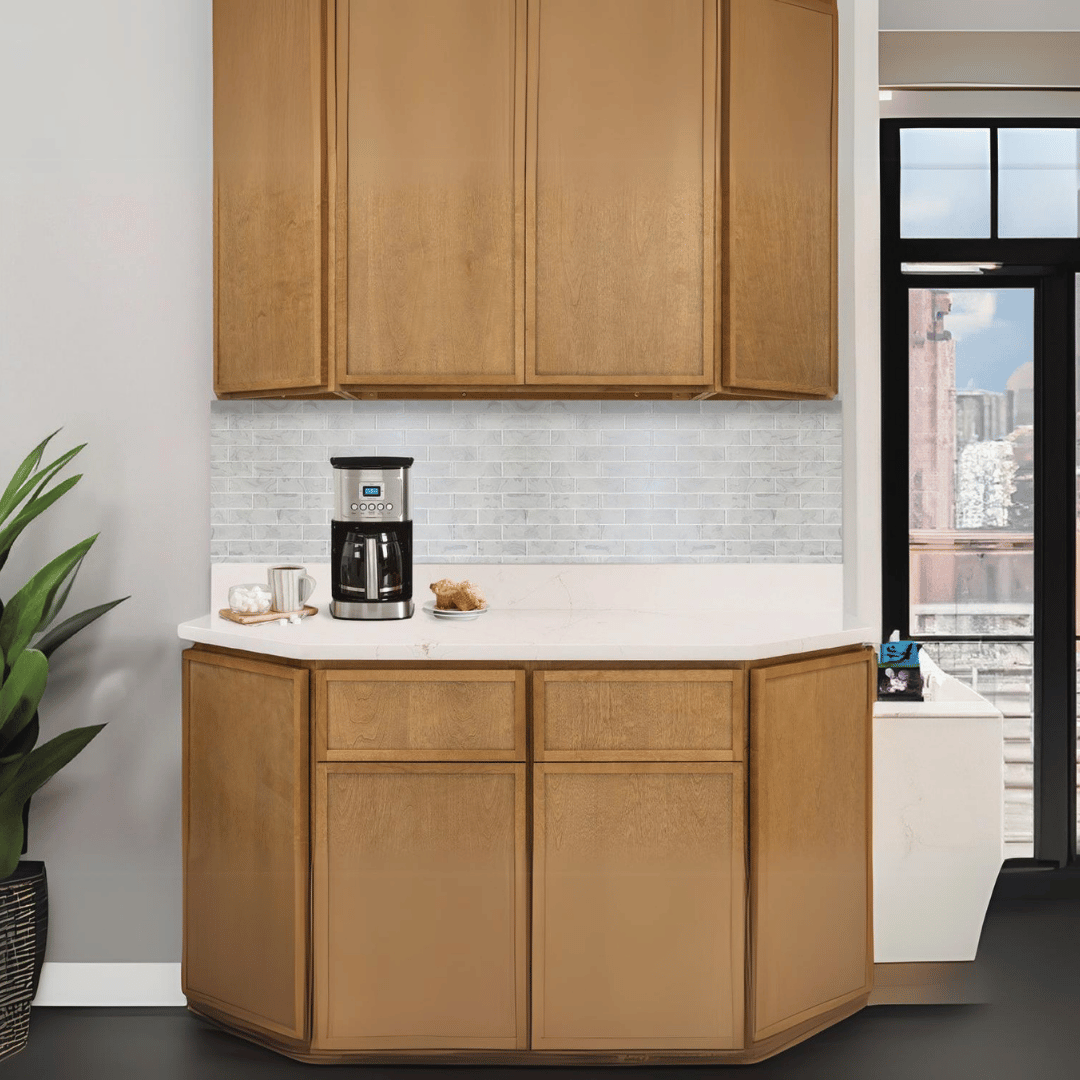
The Ultimate Guide to Cabinet Door Material Selection for Durability and Style
The most durable kitchen cabinet doors for everyday use are five-piece doors with a solid wood frame and a stable center panel (usually MDF for painted doors or veneered panels for stained ones), finished at the factory. Solid wood looks rich but wide panels of solid wood move with humidity; MDF paints beautifully but must stay sealed; laminate and thermofoil are easy to clean but harder to repair.
Key takeaways
- Door durability depends on construction and finish as much as on the material name.
- A solid wood frame with an MDF center panel is a stable, common combination for painted shaker and raised-panel doors.
- Wide panels of solid wood expand and contract with seasons, which can crack paint at the joints.
- Laminate and thermofoil resist stains but can chip, peel or delaminate and are hard to repair.
- Match the material to the room: heat, steam, sun and how hard the doors will be used.
1. Understanding Cabinet Door Materials
Cabinet doors are built in two basic ways. Five-piece doors have a frame of four rails and stiles around a center panel (shaker and raised-panel doors). Slab doors are one flat piece. The materials used for each:
- Solid wood: used for door frames and sometimes raised center panels. Strong at joints, can be stained to show grain.
- MDF (medium-density fiberboard): smooth and stable, used for painted center panels and one-piece painted doors.
- HDF (high-density fiberboard): a denser fiberboard used in some door components.
- Plywood or veneered panels: used for stained slab doors and flat panels.
- Laminate and melamine: decorative surfaces bonded to particleboard or MDF, common in slab doors.
- Thermofoil: a vinyl film heat-formed over an MDF door.
2. Comparing Common Cabinet Door Materials
| Door material | Strengths | Watch out for |
|---|---|---|
| Solid wood frame + MDF panel | Stable panel, strong joints, smooth paint on the panel | Paint can hairline at frame joints as wood moves |
| Solid wood frame + panel of solid wood | Natural grain, repairable | Panel shrinks and swells seasonally; painted versions show gaps |
| One-piece MDF | One-piece painted look, no joint lines | Swells if water reaches exposed edges; heavy |
| Veneered plywood or MDF slab | Real wood look on a stable core | Veneer edges can chip with impact |
| Laminate / melamine slab | Stain resistant, easy to clean, budget friendly | Chips are hard to repair; edge banding can lift |
| Thermofoil | Smooth, easy-clean surface | Can peel or discolor near heat sources such as ovens |
3. Evaluating Durability
Durability in a cabinet door means three things: it stays flat and square, its joints stay tight, and its finish resists wear and moisture. What helps:
- Stable center panels: MDF or veneered panels do not shrink and swell like wide solid wood, so they keep the door flat.
- Strong frame joinery: solid wood or dense fiberboard frames hold hinge screws and resist racking.
- A sealed, factory finish on all faces and edges, so moisture cannot reach the core.
- Soft-close hinges, which stop slamming that loosens joints and chips edges.
The least durable choices are usually unsealed MDF edges near the sink or dishwasher, thermofoil next to an oven without a heat shield, and low-cost laminate doors with thin edge banding in high-traffic kitchens.
4. Assessing Appearance
- Stained wood grain: solid wood frames and veneered panels show natural grain variation.
- Smooth painted look: MDF panels give the cleanest painted surface.
- Shaker style: a flat recessed panel in a square frame, the most common five-piece door.
- Raised panel: a beveled or profiled center panel for a traditional look.
- Slab: a flat one-piece door for a modern, minimal look.
5. Maintenance Considerations
- All doors: clean with a soft cloth, mild detergent and warm water, then dry. Avoid silicone and wax products and abrasive pads.
- Painted doors: touch up chips promptly so moisture cannot reach the core.
- Stained wood doors: small scratches can be touched up with a matched marker.
- Laminate and thermofoil: wipe clean; keep heat sources away; chips and lifting edges are difficult to repair.
6. Choosing Door Materials by Room and Use
| Situation | Good choice | Why |
|---|---|---|
| Busy family kitchen | Wood frame + MDF panel, factory finish | Stable, repairable, durable finish |
| Painted shaker look | Wood frame + MDF panel | Flat painted panel without seasonal gaps |
| Stained, natural look | Wood frame + veneered or wood panel | Shows grain |
| Rental turnover | Durable painted or stained five-piece door | Repairable between tenants |
| Near ovens and toasters | Avoid thermofoil without a heat shield | Heat can damage the film |
| Bathroom | Sealed finish on all edges | Humidity and splashes |
7. Expert Tips for Selecting Cabinet Door Materials
- Ask how the door is built, not just what color it is: frame material, panel material and finish.
- Look at the edges of a sample door; that is where water and impacts attack first.
- Match the door to the box: a durable door on a weak particleboard box still fails at the hinges.
- Consider the room’s heat, steam and sunlight.
- See samples in person under the kitchen’s lighting.
For the box behind the door, read plywood vs. MDF vs. particleboard cabinet boxes; for overall durability, what makes kitchen cabinets durable.
8. CCC Cabinets Door Construction
CCC Cabinets uses five-piece, full-overlay doors with a recessed square profile on its 15 in-stock styles. Door frames are 3/4-inch solid birch on most styles and HDF on some; center panels are MDF, on some styles with an applied veneer. Painted styles such as Pure White and Shaker Blue use a powder-coating-type process for an even finish; stained styles such as Espresso Shaker, Dark Grey and Cappuccino show wood grain. Doors hang on 6-way adjustable soft-close hinges, and painted finishes carry a 2-year limited warranty within CCC’s 5-year limited cabinet warranty. Compare all styles on the cabinet styles page and open a trade account for pricing. Learn more at CCC Cabinets.
Frequently Asked Questions
What is the most durable material for kitchen cabinet doors?
For most kitchens, a five-piece door with a solid wood frame and a stable MDF or veneered center panel, with a factory finish, is the most durable everyday choice. It stays flat, holds hinges well and can be touched up. Panels of solid wood look rich but move seasonally, and laminate or thermofoil is hard to repair once damaged.
Are MDF cabinet doors good quality?
Yes, when they are well made and fully sealed. MDF gives the smoothest painted surface and does not move with humidity the way solid wood does, so painted MDF panels stay flat. Its weakness is water reaching an unsealed edge, which can cause swelling, so a good factory finish on all faces matters.
What are the types of cabinet door materials?
The main cabinet door materials are solid wood, MDF, HDF, veneered plywood or MDF, laminate or melamine over a composite core, and thermofoil over MDF. Many doors combine materials, such as a solid wood frame with an MDF center panel, which is common for painted shaker and raised-panel doors.
Is solid wood better than MDF for cabinet doors?
It depends on the finish. For stained doors, solid wood shows natural grain. For painted doors, MDF center panels are usually better because they do not shrink and swell, so paint does not crack where the panel meets the frame. Many quality painted doors use a solid wood frame with an MDF panel.
How do laminate cabinet doors compare to wood?
Laminate doors are typically less expensive, resist stains and are easy to clean, but chips and lifting edge banding are difficult to repair, and the look is uniform rather than natural. Wood and painted MDF doors can be touched up and refinished, which matters over a long service life.
How can I choose the right kitchen doors for my needs and budget?
Decide the look first (painted, stained or slab), then compare door construction and finish within your budget. Check the edges and joints of samples, confirm the hinge type, and make sure the box behind the door is equally durable. Spend more on doors in the hardest-used areas, such as near the sink and range.
Conclusion
Choosing cabinet door materials is about construction and finish as much as the material name. A solid wood frame with a stable center panel and a factory finish is the dependable choice for busy kitchens. To see CCC’s door styles in person, visit the showroom at 2180 S Wolf Rd, Des Plaines, IL 60018 or call (872) 241-5525.
More in Materials & Construction
Sourcing cabinets for a Chicagoland project?
CCC Cabinets supplies 15 door styles — including Pure White cabinets — at wholesale prices from our Des Plaines, IL warehouse. Confirm availability for your door style, then choose warehouse pickup near O’Hare or scheduled delivery across Chicagoland.
Door styles to explore: Pure White · Shaker Blue · Dark Grey
Browse all cabinet styles · Open a dealer account · Call (872) 241-5525 · Talk to our team