
How the Kitchen Cabinet Industry Adapts to Changing Consumer Preferences
The kitchen cabinet industry is adapting in four main ways: simpler, more personal designs; documented, responsible wood sourcing and low-emission panels; more configuration options within standard cabinet lines; and practical built-in features such as lighting and organizers. For buyers, sustainability now means paperwork you can check, such as FSC certification, Lacey Act compliance for imported wood and TSCA Title VI labels on composite panels.
Key takeaways
- Design is moving toward clean, simple door profiles with warmer colors and wood tones, and two-tone kitchens.
- Sustainable sourcing is verifiable: ask for FSC chain-of-custody claims, Lacey Act compliance on imported wood, and TSCA Title VI labels on plywood, MDF and particleboard.
- Exotic hardwoods such as teak appear mostly as veneers and accents; their sustainability depends on documented origin, not the species name.
- Contractors benefit most from suppliers that stock current styles locally and publish their construction specs.
Trends at a glance
| Trend | What it means for cabinets | What to ask your supplier |
|---|---|---|
| Simpler design | Shaker and slim-frame doors, fewer moldings, matte and satin finishes | Which door profiles and sheens are stocked? |
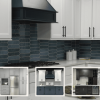
| Warmer color | Greens, navies, deep blacks and wood tones next to whites and greys | Can I see a full door sample in my light? |
| Responsible sourcing | Certified and documented wood; low-formaldehyde panels | What certifications and labels apply to this exact product? |
| Configuration | Drawer bases, pull-outs, organizers within standard sizes | Which sizes and inserts are in stock? |
| Built-in features | Under-cabinet lighting, charging drawers, soft-close hardware | What is standard and what is an add-on? |
1. The rise of consumer-centric design
Consumer preferences have shifted toward personalization and function: homeowners want kitchens that store what they own and look like the rest of their home, not a showroom template.
As a result, the kitchen cabinet industry offers more styles, colors and finishes within each line. At CCC Cabinets, the in-stock range of kitchen cabinets covers modern, prestige and elegant door styles, from flat-panel shaker to raised-panel designs, so contractors and homeowners can find a fit without going custom.
Trends in design preferences
- Minimalist aesthetics: clean lines and simple door profiles create uncluttered spaces; see our transitional cabinet design guide for how simple profiles bridge traditional and modern homes.
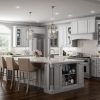
- Natural finishes: stained doors with visible grain add warmth, often on an island next to painted perimeter cabinets.
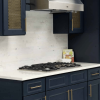
- Bold but muted colors: deep navy, soft green and black are used as accents or whole kitchens; CCC added Matcha Latte (soft sage green) and Black Roast (deep black) to its 2026 range.
2. Sustainability: a key driver of change
Environmental concerns now shape cabinet choices, and the industry is responding with sourcing and emissions rules that buyers can check. Three are worth knowing:
- Formaldehyde limits on composite wood: according to the EPA, since March 22, 2019 composite wood products sold or imported in the US, including hardwood plywood, MDF and particleboard and finished goods containing them, must be labeled TSCA Title VI compliant.
- Legal harvest of imported wood: the USDA APHIS Lacey Act page states that it is against the law to import any illegally harvested plant or plant product into the United States, and that declaration requirements have been extended to more imported wood products, including furniture.
- Forest certification: FSC certification provides independent verification of responsible forest management, and its label is used to identify certified products.
Certifications and standards: how to check a claim
- Ask which certification applies to the exact product, not just the company.
- For FSC claims, ask for the certificate code and confirm it with FSC before relying on the claim.
- Look for the TSCA Title VI label on composite panels or the finished product’s documentation.
- For imported cabinets, ask the importer how Lacey Act requirements are met.
Sustainable teak and hardwood sourcing: what the trend means for cabinets
Interest in sustainably sourced teak and other tropical hardwoods shows up in many industry reports and searches. Teak is valued for its natural oils, stability and warm color, which is why it is common in outdoor and marine furniture. In kitchen cabinets it appears mostly as veneer, open shelving or accent pieces rather than whole cabinet boxes. What makes teak sustainable is not the species but the paper trail: plantation or certified forest origin, a valid certification claim and legal import documentation.
| Question | Good answer | Red flag |
|---|---|---|
| Where was the wood grown? | Named country and certified or plantation source | “Imported hardwood” with no origin |
| Is it certified? | Certificate code you can verify for this product | A logo with no code or a company-level claim only |
| Is it veneer or solid? | Clear spec per part (panel, frame, shelf) | “Teak cabinets” with no part-by-part spec |
| How is it finished? | Finish suited to kitchen moisture and cleaning | Oil-only finish recommended for a sink wall |
For everyday kitchens, a responsibly made domestic hardwood face frame on a plywood box often meets the same goals with simpler sourcing. Our cabinet materials guide explains each part.
3. The demand for customization
Homeowners want cabinets that fit their space and habits, but that does not always mean custom-built cabinets. The industry now offers far more configuration inside standard lines:
- Size variations: standard widths combined with fillers and panels fit most rooms; modifications handle the exceptions.
- Configurable features: adjustable shelves, drawer bases, pull-outs and organizers tailor storage without custom construction.
- Finish choice: a wide range of painted and stained finishes lets a stocked line suit very different homes.
Benefits of configurable stock cabinets
For contractors, stocked cabinets with real choice shorten schedules and make repeat work predictable. CCC Cabinets is a stocking wholesaler rather than a custom shop: it keeps 15 door styles in stock and offers cabinet modifications for an additional fee. Contractors working on several jobs can set up a trade account for project pricing.
4. Technological integration in kitchen cabinets
Technology in cabinetry is mostly practical rather than high-tech. The features homeowners actually use:
| Feature | What it does | Planning note |
|---|---|---|
| Soft-close hinges and glides | Quiet, slam-free doors and drawers | Now expected in most mid-range lines |
| Under-cabinet and interior LED lighting | Task light on counters and inside cabinets | Plan wiring before drywall and cabinet install |
| Charging drawers and outlets | Keeps devices off the counter | Requires an electrician; check local code |
| Electronic locks | Secures medicine or valuables | Niche; consider a lockable drawer instead |
Electrical features change the permit picture: in Chicago, cabinets without electrical connections need no building permit, but adding circuits does. Our Chicago kitchen remodeling guide covers the details.
5. Trends in cabinet materials and finishes
Buyers want durable, low-maintenance materials that still look good.
Popular materials
- Solid wood face frames: birch face frames remain a common feature in quality framed cabinetry.
- Plywood boxes: strong, screw-holding and more tolerant of moisture than particleboard.
- MDF door panels: a smooth, stable surface for painted doors.
- Laminate: improved prints now mimic natural materials at lower cost, mainly in contemporary lines.
Finish trends
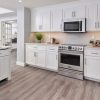
Matte and satin sheens are popular because they look current and hide fingerprints better than high gloss. Two-tone cabinetry, with a lighter perimeter and a darker island, remains a common way to add character.
6. The role of wholesale suppliers in adapting to change
Wholesale suppliers connect manufacturers’ new styles to the contractors who install them. A stocking supplier that keeps current styles in a local warehouse lets contractors offer clients the newest looks without waiting on long lead times.
CCC Cabinets keeps all 15 of its door styles in stock in Des Plaines, near O’Hare, with the same construction on every style: 1/2-inch A-grade plywood boxes, 3/4-inch birch face frames, MDF door center panels, 17 mm solid wood dovetail drawers and soft-close hardware. Orders can be picked up in Des Plaines or delivered to Chicagoland jobsites; see delivery and pickup options.
Supporting contractors and builders
Suppliers help contractors keep up by publishing clear specifications, keeping popular finishes in stock and making it easy to see new styles in person before recommending them to clients.
7. Expert tips for contractors and homeowners
- Stay informed: follow trade sources such as NKBA, and see new finishes in person before specifying them.
- Configure before you customize: standard sizes with fillers, drawer bases and organizers solve most layouts.
- Verify sustainability claims: ask for product-level certification codes and TSCA Title VI labels.
- Plan technology early: lighting and charging need wiring before cabinets go in.
- Think about reorders: choose lines you can buy again for later repairs or phases.
Frequently Asked Questions
What are the biggest trends in the kitchen cabinet industry?
Simpler door profiles such as shaker and slim-frame designs, warmer colors and wood tones, two-tone kitchens, matte and satin finishes, more storage configuration within standard sizes, practical built-in lighting and soft-close hardware, and greater attention to verified, responsible sourcing of wood and composite panels.
Is teak a good wood for kitchen cabinets?
Teak is stable, naturally oily and attractive, which is why it is used in outdoor and marine furniture. In kitchens it is usually used as veneer, shelving or accents rather than whole cabinets because of cost and supply. If you choose teak, insist on documented, certified or plantation origin and a finish suited to kitchen moisture.
How can I tell if cabinet wood is sustainably sourced?
Ask for a certification that applies to the specific product, such as an FSC claim with a certificate code you can look up, plus the country of origin. For imported products, ask how the importer meets Lacey Act requirements. A logo without a verifiable code is not proof.
What does TSCA Title VI compliant mean on cabinets?
It means the composite wood in the product, such as hardwood plywood, MDF or particleboard, meets the federal formaldehyde emission standards enforced by the EPA. Since March 2019, composite wood products sold or imported in the United States must carry a TSCA Title VI compliant label.
Are smart features worth adding to kitchen cabinets?
The most useful features are simple: soft-close hinges and glides, under-cabinet lighting and a charging drawer. They need planning before installation, and anything electrical requires an electrician and may require a permit. Niche features such as electronic locks suit specific needs rather than every kitchen.
How are wholesale cabinet suppliers responding to changing preferences?
By stocking current door styles and finishes locally, adding new colors to existing lines, publishing construction specifications and offering both assembled and ready-to-assemble cabinets, so contractors can offer up-to-date kitchens on predictable schedules.
Keep your projects current
The cabinet industry is changing in ways buyers can see and verify: simpler designs, warmer colors, documented sourcing and practical features. To see current styles in person, visit the CCC Cabinets showroom at 2180 S Wolf Rd, Des Plaines, call (872) 241-5525, or contact us.
More in Kitchen Cabinets
Sourcing cabinets for a Chicagoland project?
CCC Cabinets supplies 15 door styles — including Cappuccino cabinets — at wholesale prices from our Des Plaines, IL warehouse. Confirm availability for your door style, then choose warehouse pickup near O’Hare or scheduled delivery across Chicagoland.
Door styles to explore: Cappuccino · Matcha Latte · Shaker Blue
Browse all cabinet styles · Open a dealer account · Call (872) 241-5525 · Talk to our team