The Ultimate Guide to Wine Rack Cabinet Inserts for Dedicated Storage
A wine rack cabinet insert is a lattice, cubby or cradle unit that fits inside a cabinet box and holds bottles on their sides. To choose one, measure the cabinet’s door opening and interior, match the cell size to the bottles you keep, pick a style (lattice, X-bin, cubby or drawer insert), and plan how it will be fastened without damaging the cabinet.
Key takeaways
- A wine rack insert turns part of a wall cabinet, base cabinet or open end unit into dedicated bottle storage without changing the cabinet layout.
- Measure the face-frame opening, not just the interior: on a framed cabinet the opening is narrower than the box, and the insert has to pass through it.
- Size cells for the widest bottle you store; Burgundy, sparkling and magnum bottles need more room than a standard Bordeaux-style bottle.
- Keep wine away from the range, dishwasher and refrigerator exhaust; a kitchen cabinet is everyday storage, not a cellar.
- The look in practice: CCC’s Cappuccino kitchen below pairs a diamond-lattice wine rack with open bottle cubbies.

Understanding Wine Rack Cabinet Inserts
A wine rack insert is a self-contained rack that slides into a cabinet box, either behind a door or in an open cabinet with no door. Most are made of wood or metal and hold bottles horizontally, which keeps natural corks in contact with the wine. Some are built into the cabinet at the factory as a dedicated wine unit; others are sold separately and retrofitted into a standard cabinet after installation.
For a kitchen designer or remodeler, the insert is a detail that has to be decided early: it affects which cabinet box you order (open or with a door, wall or base, and what width), where it sits relative to heat sources, and whether the shelves and shelf pins stay or come out.
Types of Wine Rack Inserts
| Insert type | How it holds bottles | Best use |
|---|---|---|
| Diamond lattice | Crossed slats form diamond-shaped cells, one bottle per cell | Wall cabinets and open end units; a classic look that suits raised-panel and shaker kitchens |
| X-rack (bin) | A large X divides the box into four triangular bins; bottles stack in each bin | Maximum bottles in a small box; less suited to fragile labels or quick single-bottle access |
| Square cubbies | A grid of square openings, one bottle per opening | Display and easy access; clean, modern look |
| Cradle or scalloped rails | Notched rails support each bottle at the neck and base | Shallow spaces and open shelving; bottles stay visible |
| Drawer insert | Scalloped dividers inside a deep drawer hold bottles label-up | Base cabinets and islands; good when wall space is limited |
| Stemware rack | Rails under a wall cabinet or shelf hang glasses by the foot | Pairs with a bottle insert to create a small bar zone |
Sizing: Bottles, Cells and Cabinet Depth
Most sizing problems come from measuring the wrong thing. Work through these measurements before choosing an insert:
- Door opening (face-frame opening). On a framed cabinet, the insert must fit through the opening between the stiles and rails, which is smaller than the interior box. A prebuilt insert sized to the interior width will not go in.
- Interior width, height and depth. Measure at the back and the front; note any shelf pins, hinge plates or face-frame lips that project into the space.
- Your bottles. A standard 750 ml Bordeaux-style bottle is roughly 3 in. across and about 12 in. tall. Burgundy, pinot and sparkling bottles are wider, and magnums are larger still. Bottle shapes vary by producer, so size the cells for the widest bottle you keep.
- Cell size. Cubbies for standard bottles are commonly around 4 in. square. If you keep sparkling wine or magnums, plan a separate row or bin with larger openings.
Cabinet depth decides how bottles sit:
| Cabinet | Typical depth | What it means for wine |
|---|---|---|
| Wall cabinet | 12 in. (nominal) | A standard bottle lying front-to-back fills most of the depth; necks may sit near or at the face, so check door clearance if the cabinet has a door |
| Base cabinet | 24 in. (nominal) | Room for a full-length rack or a deep drawer insert; one-deep racks leave unused space at the back |
| Open end unit or shelf | Varies | Works well for lattice and cubbies on display; keep it away from direct sun |
A quick capacity check for a cubby insert: divide the usable interior width by the cell width, divide the usable height by the cell height, and multiply the two (round each down). For lattice and X-bins, use the manufacturer’s stated capacity for the exact size you order.
Choosing the Right Wine Rack Cabinet Inserts
1. Size and Capacity
Decide how many bottles you actually keep on hand, then add a little headroom. In a kitchen, a single wall cabinet or one base cabinet of wine storage covers everyday use; larger collections usually belong in a wine refrigerator or a dedicated cellar space.
2. Material
| Material | Strengths | Watch for |
|---|---|---|
| Wood (solid or plywood) | Matches stained or painted cabinetry; quiet; can be finished to match the door style | Keep it dry; finish any cut edges; check that slats are thick enough for full bottles |
| Metal (steel or wire) | Thin profile, so more room for bottles; modern look | Bottles can clink; coating quality varies; harder to match to wood cabinets |
3. Design Style
Match the insert to the door style. A diamond lattice suits raised-panel and traditional kitchens; square cubbies and scalloped rails fit shaker and modern kitchens. If the insert sits in an open cabinet, the interior finish is on display, so the insert finish should match or deliberately contrast with the cabinet interior.
4. Wine Type
Still wines with natural corks are best stored on their sides. Sparkling wine and larger formats need wider cells. Wines you open within days can stand upright in a regular cabinet; the rack is for bottles you hold longer.
5. Accessibility
Put the wine where it is easy to reach but out of the main cooking zone. Wall cabinets at or below eye level, base cabinets at the end of a run, island ends and a butler’s pantry are common choices. Drawer inserts let you see labels from above without pulling bottles out.
Where to Place Wine Storage in a Kitchen
Wine is sensitive to heat, light and vibration. Kitchen cabinets are fine for everyday bottles if you avoid the warmest spots:
- Avoid: cabinets next to or above the range or cooktop, beside the dishwasher, above the refrigerator, and any cabinet in direct afternoon sun.
- Good options: the end of a base run away from appliances, the end of an island, a wall cabinet on an interior wall, or a dining-room or pantry run.
- Long-term storage: for bottles you plan to keep for years, a temperature-controlled wine refrigerator or cellar is the better tool; a cabinet insert is for short-term and display storage.
How to Incorporate Wine Rack Cabinet Inserts in Your Space
For new cabinets, plan the wine location in the layout and order the box size the insert needs. For an existing kitchen, follow these steps:
Step 1: Assess Your Space
Pick a cabinet away from heat sources and measure the face-frame opening, the interior and the depth. Check for obstructions such as hinge plates, shelf pins and plumbing.
Step 2: Choose Your Inserts
Select an insert sized to the opening, with cells sized for your bottles. Confirm the stated capacity for that exact size.
Step 3: Installation
Remove the shelves and shelf pins, dry-fit the insert, and check that it is level and square. Fasten it through the insert into the cabinet bottom or sides with screws that are shorter than the combined thickness of the insert frame and the cabinet side, so nothing pokes through a finished end panel. Many inserts are simple to install yourself; follow the insert manufacturer’s instructions.
Step 4: Organize Your Collection
Load from the bottom up so the rack does not tip, group bottles by type or by when you plan to open them, and keep sparkling wine in the larger cells.
Step 5: Maintain Optimal Conditions
Keep the cabinet dry and out of direct sun, and check that the door, if any, closes without touching bottle necks.
Common Mistakes to Avoid
- Measuring the interior width instead of the face-frame opening.
- Sizing every cell for standard bottles, then having nowhere to put sparkling wine or magnums.
- Placing the wine cabinet above the refrigerator or next to the range.
- Using long screws that come through a finished cabinet side.
- Forgetting door clearance in a 12 in. deep wall cabinet.
- Treating a kitchen cabinet as long-term aging storage.
Maintenance and Care for Your Wine Rack Inserts
- Regular cleaning: dust the insert with a soft, dry microfiber cloth. For cabinet surfaces, use a soft cloth with mild detergent and warm water, then dry; avoid silicone or wax products.
- Check for damage: look for loose slats or joints, especially in racks that hold full rows of bottles.
- Avoid excess moisture: wipe up drips right away; standing moisture can damage wood and finishes.
How CCC Cabinets Fits
CCC Cabinets is a wholesale supplier of kitchen and bathroom vanity cabinets for Chicagoland contractors, remodelers, kitchen dealers and designers. The kitchen pictured above is CCC’s Cappuccino door style with a lattice wine rack and open bottle cubbies. If you are planning wine storage, bring your layout and the insert you have in mind to the Des Plaines showroom so the cabinet box and door can be matched to it before you order.
- Box construction that holds screws well: 1/2″ A-grade plywood sides with wood veneer, a 1/2″ full plywood back and 3/4″ A-grade plywood shelves.
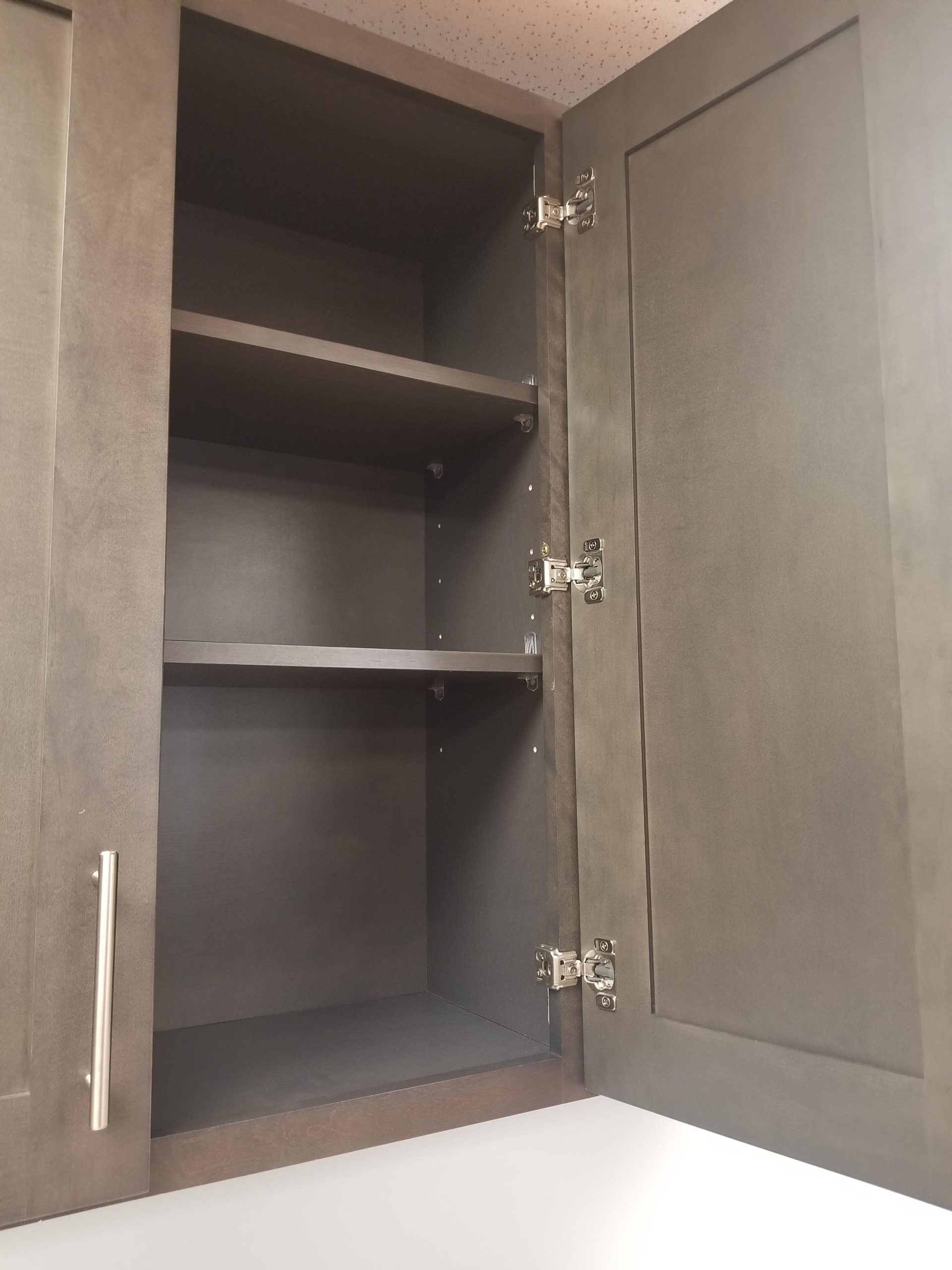
- Interiors match the door color on all styles except Black Roast and Matcha Latte, which have a natural wood-tone interior, which matters when a wine cabinet is left open.
- 15 door styles in stock, from stained Cappuccino and Espresso Shaker to painted whites, greys and navy; compare them on the cabinet styles page.
- Trade pricing through a trade account, with warehouse pickup or delivery across Chicagoland.
For other storage add-ons, see our guides to vertical cabinet dividers and kitchen cabinet organization.
Frequently Asked Questions
What is a wine rack cabinet insert?
A wine rack cabinet insert is a rack that fits inside a cabinet box and holds wine bottles on their sides. Common types are diamond lattice, X-shaped bins, square cubbies, scalloped rails and drawer inserts. It turns part of a wall or base cabinet into dedicated bottle storage without changing the cabinet layout.
Will a wine rack insert fit in a 12-inch-deep wall cabinet?
Usually yes, but it is tight. A standard bottle is about 12 inches long, so in a nominal 12-inch wall cabinet the neck may sit close to the face. Measure the inside depth, account for the door and hinges, and choose an insert designed for wall cabinets or use an open cabinet without a door.
Can you put a wine rack insert in a base cabinet?
Yes. Base cabinets are about 24 inches deep, so they fit full-depth racks, X-bins or a deep drawer with scalloped dividers. Choose a base cabinet away from the dishwasher, range and refrigerator, and make sure the insert passes through the face-frame opening.
What size cubby do wine bottles need?
Cubbies for standard 750 ml bottles are commonly around 4 inches square. Burgundy, pinot and sparkling bottles are wider and magnums larger, so plan a few larger cells or a separate bin if you keep them. Measure your own widest bottles before ordering.
Is it OK to store wine in a kitchen cabinet?
It is fine for bottles you plan to drink in the near term, as long as the cabinet is away from heat, direct sunlight and vibration. Avoid cabinets above the refrigerator or beside the range and dishwasher. For long-term aging, use a temperature-controlled wine refrigerator or cellar.
Can I add a wine rack insert to existing cabinets?
Yes. Remove the shelves and shelf pins, measure the face-frame opening and interior, and choose an insert sized to fit. Dry-fit it, check that it is level, then fasten it with screws short enough not to come through a finished side. Load bottles from the bottom up.
Conclusion: Planning Wine Storage Into Your Cabinets
A good wine rack insert comes down to correct measurements, the right cell size for your bottles and a location away from heat. Decide on it while the cabinet layout is still being drawn, and you can order the box and door style that suit it from the start.
To see door styles and plan a wine cabinet for a Chicagoland project, visit the CCC Cabinets showroom at 2180 S Wolf Rd, Des Plaines, IL 60018, or call (872) 241-5525. Trade customers can open an account, and anyone with questions can contact our team.
More in Hardware & Function
Sourcing cabinets for a Chicagoland project?
CCC Cabinets supplies 15 door styles — including Cappuccino cabinets — at wholesale prices from our Des Plaines, IL warehouse. Confirm availability for your door style, then choose warehouse pickup near O’Hare or scheduled delivery across Chicagoland.
Door styles to explore: Cappuccino · Mini White Shaker · Shaker Blue
Browse all cabinet styles · Open a dealer account · Call (872) 241-5525 · Talk to our team