The Complete Guide to Kitchen Cabinet Financing and Payment Plans for Homeowners
Homeowners usually pay for new kitchen cabinets with cash savings, a personal loan, a home equity loan or line of credit, a credit card promotion, financing offered by their contractor or retailer, or, when buying or refinancing, an FHA 203(k) renovation mortgage. The right choice depends on the project size, your home equity, your credit and how quickly you can repay. Compare the total cost, not just the monthly payment.
Key takeaways
- Price the whole kitchen first (cabinets, counters, installation, trades), then decide how much to finance.
- Secured options such as home equity loans often cost less but put your home at risk if you cannot pay.
- Promotional zero-interest offers can be useful but may carry deferred interest if not paid off in time; read the terms.
- Most contractors use a payment schedule tied to project milestones; never pay most of the job upfront.
- Compare the annual percentage rate (APR), fees, term and total repayment for every option.
Understanding Kitchen Cabinet Financing
Cabinets are one of the largest line items in a kitchen remodel, and they are usually bought as part of a larger project. Financing spreads the cost over time but adds interest and fees. Before choosing a loan, get itemized quotes for the full project so you know how much you actually need.
Note on buying from wholesale suppliers: CCC Cabinets sells to the trade, not to retail customers, so homeowners buy CCC cabinets through their contractor or designer and pay according to the contractor’s payment terms.
Types of Financing Options Available
| Option | How it works | Watch out for |
|---|---|---|
| Savings | Pay as the project progresses | Keep an emergency reserve for surprises |
| Personal loan | Unsecured loan, usually fixed rate and term | Rates depend heavily on credit; origination fees |
| Home equity loan | Lump sum borrowed against home equity | Your home is collateral; closing costs |
| Home equity line of credit | Draw as needed against home equity | Variable rates; home is collateral |
| Credit card promotion | Short promotional rate on purchases | High rates after the promotion; deferred interest terms |
| Contractor or retailer financing | Financing arranged at the point of sale | Compare its APR and fees with outside lenders |
| FHA 203(k) mortgage | Renovation costs included in a purchase or refinance mortgage | Program rules, approved lenders, longer process |
1. Personal Loans
Banks, credit unions and online lenders offer unsecured personal loans with fixed payments. They are simple and fast, but the rate depends on your credit, and some loans charge an origination fee.
2. Credit Cards
A card with a promotional rate can work for a smaller purchase you can repay quickly. Read whether interest is waived or deferred; with deferred interest, unpaid balances at the end of the promotion can be charged interest back to the purchase date.
3. Home Equity Loans and Lines of Credit
Borrowing against home equity often carries lower rates than unsecured credit, but your home secures the loan, and there may be closing costs.
4. Contractor and Retail Financing
Some contractors and retailers arrange financing through a lender. Ask who the lender is, the APR, fees and what happens if the project is delayed, and compare it with other options.
5. Government Programs
The FHA 203(k) program lets homebuyers and homeowners finance repairs and improvements into their mortgage. HUD describes a Limited 203(k) that permits financing up to $75,000 for repairs, improvements or upgrades and lists remodeling the kitchen as an example, and a Standard 203(k) for major rehabilitation. Work with an FHA-approved lender to see whether you qualify. Local governments sometimes offer home repair programs as well.
Payment schedules with your contractor
Separately from financing, every remodel has a payment schedule. A sound schedule:
- Starts with a modest deposit, not most of the contract price.
- Ties progress payments to completed milestones, such as demolition, rough-in inspections, cabinet installation and countertop installation.
- Holds a final payment until the punch list is complete.
- Is written into the contract along with the change order process.
Our guide to choosing a kitchen renovation contractor covers contracts and payments in more detail.
How to Choose the Right Payment Plan
1. Assess Your Financial Situation
Set a monthly payment you can afford with room for other expenses and a contingency for surprises in the project.
2. Compare APRs and Total Cost
Compare APR, fees and the total amount you will repay, not only the monthly payment.
3. Match the Term to the Project
Shorter terms cost less in interest; longer terms lower the payment but raise the total cost.
4. Read the Fine Print
Look for prepayment penalties, deferred interest, variable rates and what happens if you miss a payment.
Budgeting for Kitchen Cabinets
- Cabinets: priced from your box list; the tier and construction drive the cost.
- Trim and hardware: fillers, panels, crown and pulls.
- Installation and other trades: countertops, plumbing, electrical, backsplash, painting.
- Contingency: for problems found when old cabinets come out.
See how much kitchen cabinets cost in Illinois and hidden costs in kitchen cabinet projects.
Ways to reduce how much you need to finance
- Keep the existing layout so plumbing and gas lines stay put.
- Choose well-built stocked cabinets in standard sizes instead of custom work.
- Use simple door styles and spend on construction where it matters: sink base and drawer bases.
- Get itemized bids and compare them line by line.
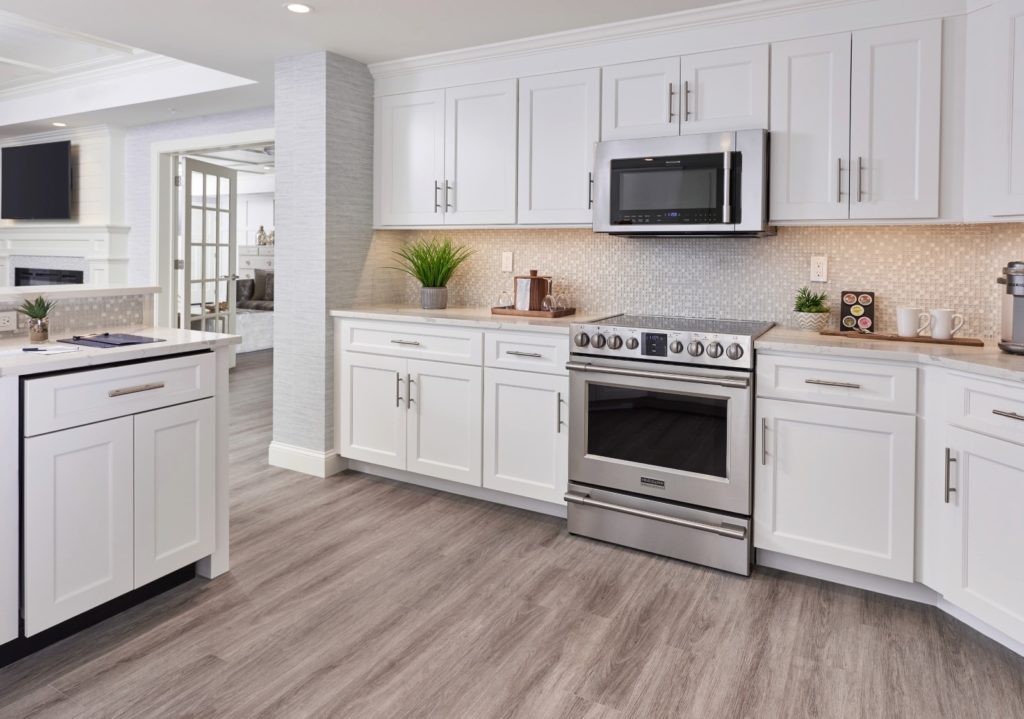
Your contractor can source in-stock cabinets such as Pure White or Light Grey through a trade supplier; browse styles on the cabinets page.
Common Mistakes to Avoid in Kitchen Cabinet Financing
- Financing before pricing: borrowing a round number instead of the real project cost.
- Focusing on the monthly payment: long terms hide a higher total cost.
- Ignoring deferred interest: promotional balances can become expensive.
- Paying too much upfront: keep payments tied to completed work.
- No contingency: surprises behind old cabinets are common.
FAQs
Are there financing or payment plans for new kitchen cabinets?
Yes. Homeowners commonly use personal loans, home equity loans or lines of credit, credit card promotions, financing arranged by a contractor or retailer, or an FHA 203(k) renovation mortgage when buying or refinancing. Contractors also use milestone payment schedules. Compare APR, fees, term and total repayment before choosing.
How can I pay for new kitchen cabinets in installments?
Installment options include a fixed-rate personal loan, a home equity loan with fixed monthly payments, a contractor or retailer financing plan, or a promotional credit card paid off within the promotion. Your contractor’s milestone payment schedule also spreads payments across the project, tied to completed work.
Can I finance a kitchen remodel with an FHA loan?
Possibly. HUD’s FHA 203(k) program lets homebuyers and homeowners finance repairs and improvements into their mortgage. HUD describes a Limited 203(k) for smaller projects, listing kitchen remodeling as an example, and a Standard 203(k) for major rehabilitation. An FHA-approved lender can tell you whether you qualify.
Is it better to use a credit card or a personal loan for cabinets?
For a small amount you can repay within a promotional period, a credit card offer may cost little. For larger amounts or longer repayment, a fixed-rate personal loan usually gives predictable payments. Compare the APR, fees and total repayment, and watch for deferred interest on card promotions.
Does CCC Cabinets sell cabinets directly to homeowners?
No. CCC Cabinets is a wholesale supplier that sells to contractors, builders, remodelers and designers. Homeowners buy through their contractor or designer and pay according to that contractor’s terms. Homeowners are welcome to visit the Des Plaines showroom with their contractor to choose door styles.
Conclusion
Financing a kitchen starts with an accurate project price, then a careful comparison of loan options and a sensible contractor payment schedule. To see cabinet styles with your contractor, schedule an appointment at the CCC Cabinets showroom, 2180 S Wolf Rd, Des Plaines, or learn more at CCC Cabinets.
More in Home Improvement
Sourcing cabinets for a Chicagoland project?
CCC Cabinets supplies 15 door styles — including Pure White cabinets — at wholesale prices from our Des Plaines, IL warehouse. Confirm availability for your door style, then choose warehouse pickup near O’Hare or scheduled delivery across Chicagoland.
Door styles to explore: Pure White · Light Grey · Millennium Cappuccino
Browse all cabinet styles · Open a dealer account · Call (872) 241-5525 · Talk to our team