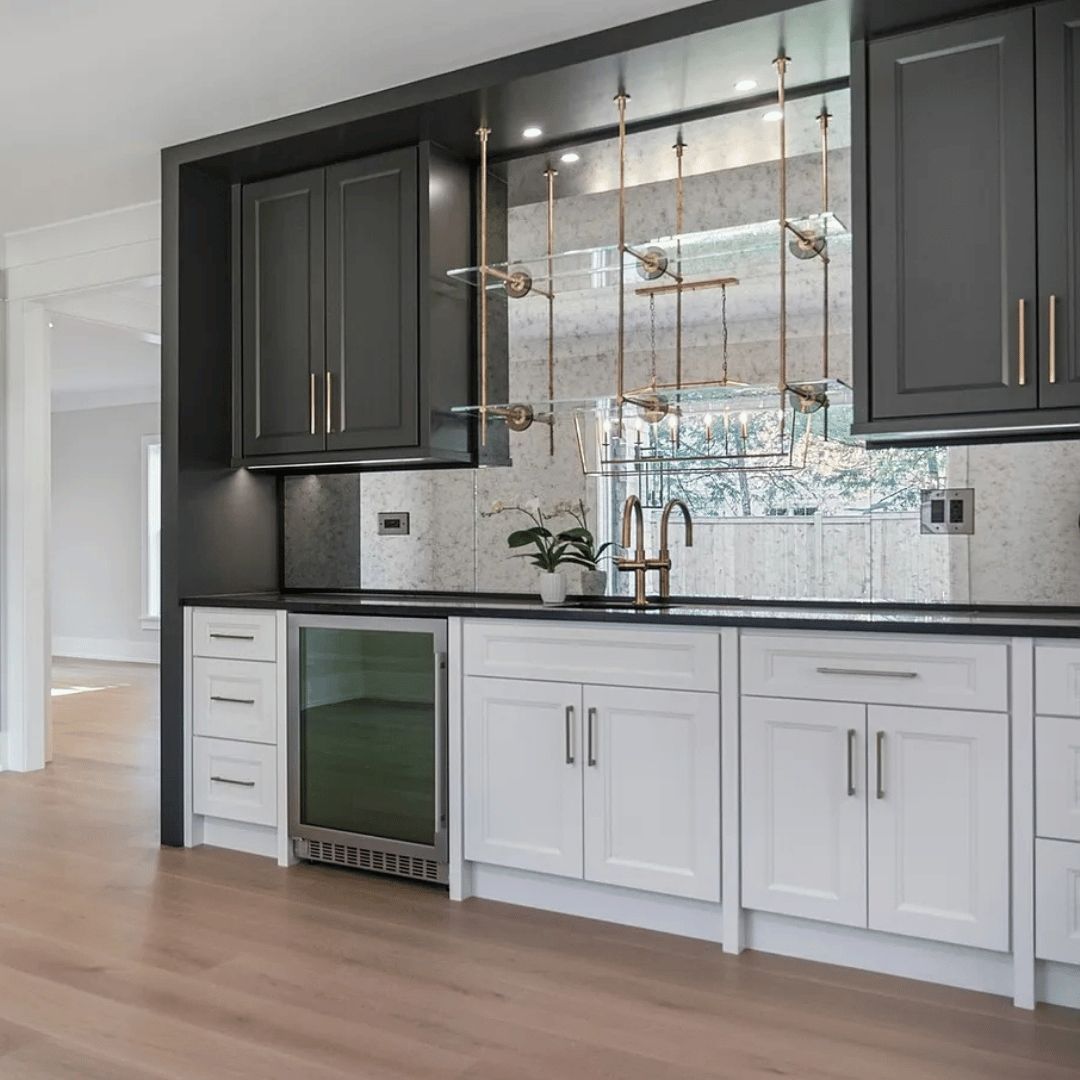
The Complete Guide to Matching Kitchen Cabinet Colors with Countertops and Backsplash
The easiest way to match cabinet, countertop and backsplash colors is to let one element lead, keep the other two quieter, and keep all three on the same undertone. In practice: choose the countertop and cabinet color together, then pick a backsplash that repeats a color already in the countertop, and test real samples side by side in the kitchen’s own light.
Key takeaways
- Pick one star: a bold countertop, a bold cabinet color or a patterned backsplash, not all three.
- Match undertones across all three surfaces: warm with warm, cool with cool.
- Choose countertop and cabinets first; the backsplash is the easiest piece to adjust last.
- Pull the backsplash color from the countertop’s veining or speckle, and choose grout on purpose.
- Check samples together in daylight and under the kitchen lights before ordering.
Understanding Color Theory for Kitchens
You do not need a design degree to use color theory in a kitchen; three ideas cover most decisions.
1. Color Harmonies
- Contrast: light against dark, such as navy cabinets with a white countertop. Crisp and easy to read.
- Analogous: neighboring colors, such as sage green cabinets with a warm beige countertop. Calm and cohesive.
- Tone-on-tone: one color family in different depths, such as white cabinets, white-and-grey countertop and grey tile. Quiet and clean.
2. Warm vs. Cool Undertones
Every white, grey and beige leans either warm (yellow, red, cream) or cool (blue, green, grey). Mixing undertones is the most common reason a kitchen looks slightly off even when each piece is attractive on its own. Hold each sample against plain white paper to see which way it leans.
3. Value (Light and Dark)
Value is how light or dark a color is. A kitchen with three surfaces of the same value can look flat; a kitchen with light, medium and dark distributed across cabinets, countertop and floor feels balanced.
Choosing the Right Cabinet Color
Cabinets cover the most surface area in a kitchen, so their color sets the base for everything else.
1. Style of the Kitchen
A modern kitchen usually reads best with clean painted colors or deep solids; a traditional or farmhouse kitchen suits warmer whites, stained wood tones and raised-panel doors. To see how CCC’s lines fit different design directions, read reasons CCC Cabinets fit different home styles.
2. Lighting Considerations
Light changes color. North-facing rooms and cool LED lighting push colors cooler; south-facing rooms and warm bulbs push them warmer. Test cabinet samples at different times of day; our guide to choosing cabinet colors for every type of lighting goes deeper.
3. Existing Elements
List what is staying: flooring, appliances, windows, an adjoining room’s paint. If you have dark hardwood floors, lighter cabinets create contrast; if you have light floors, a mid-tone or dark cabinet keeps the room from washing out. Appliance finish (stainless, black, panel-ready) also counts as a color in the room.
Matching Countertops and Backsplash
1. The order that works
- Cabinets and countertop together. These are the largest and most expensive surfaces and the hardest to change later.
- Backsplash next. Pull its color from the countertop: the veining in a quartz, a fleck in a granite, or the cabinet color itself.
- Grout and hardware. Small details that tie the palette together.
- Wall paint last. Paint is the cheapest thing to change and is matched to everything else.
2. Material and Texture
Mix textures as well as colors. Smooth painted cabinets look richer next to a textured or handmade-look tile; a busy, veined countertop looks better with a plain tile in a simple pattern. If the countertop runs up the wall as a full-height backsplash, the cabinet color has only one surface to coordinate with.
3. Picking a tile palette for an existing countertop
If you are keeping the countertop, take a photo or a sample to the tile store and match against three things: the countertop’s background color, its strongest accent color, and the cabinet color. A tile that echoes the countertop’s accent color usually looks intentional; a tile that introduces a fourth unrelated color usually does not.
4. Grout Color
Grout that matches the tile makes the backsplash read as one surface; contrasting grout emphasizes the tile pattern. Light grout behind a range shows staining sooner; a mid-tone grout is more forgiving there.
Popular Color Combinations for Cabinets, Countertops, and Backsplashes
These combinations use CCC in-stock door styles as the cabinet color. Confirm with real samples; countertop and tile colors vary by maker.
| Cabinet | Countertop | Backsplash |
|---|---|---|
| Pure White | White quartz with grey veining | White or light grey subway tile, grey grout |
| Millennium Off White (cream) | Warm white or beige stone | Cream or handmade-look tile in warm white |
| Light Grey | White, or charcoal for contrast | White tile, or marble-look tile with grey veining |
| Dark Grey | White or light grey quartz | White subway or textured light tile |
| Espresso Shaker | Bright or warm white | Cream or warm white tile; avoid very cool greys |
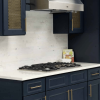
| Shaker Blue (navy) | White quartz | White tile, or a soft blue-grey to repeat the cabinet |
| Matcha Latte (sage) | Warm white or butcher block | Cream or natural stone-look tile |
| Black Roast | White with bold veining | White tile or a full-height slab backsplash |
| Cappuccino Shaker (warm brown) | Cream, beige or warm white | Warm neutral tile |
For quartz specifically, including how cabinets support a stone top, see how to match cabinets with quartz countertops. If you are deciding between white and warm white, read warm white vs. bright white cabinets.
Two-Tone Kitchens: Matching Two Cabinet Colors
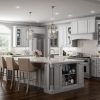
With two cabinet colors, the countertop has to work with both. The usual approach is light wall cabinets, a darker base or island, and a light countertop that bridges them. Repeat the darker color once more in the room, for example in bar stools or a light fixture, so the island does not look like a separate piece of furniture.
Expert Tips for Color Matching
- Bring samples together: a cabinet door, a countertop sample and a tile, viewed side by side in the kitchen at different times of day.
- Look at large samples: a small chip of a busy countertop can look very different on a full slab; view slabs in person when possible.
- Think about maintenance: very light countertops show stains sooner; very dark, solid ones show crumbs and water spots.
- Keep the count low: two or three main colors plus metal and wood accents is usually enough.
Common Mistakes to Avoid
- Not considering the whole space: choosing each surface in isolation instead of as a set.
- Ignoring lighting conditions: judging colors under store lighting only.
- Mixing undertones: a cream cabinet, a cool white countertop and a blue-grey tile.
- Three competing patterns: veined countertop, patterned tile and a busy floor in one room.
- Choosing the backsplash first: it is the smallest surface; let it follow the larger decisions.
How CCC Cabinets Helps With Color Selection
CCC Cabinets stocks 15 door styles at its Des Plaines showroom and warehouse, from bright and warm whites to greys, navy, sage green, black and stained wood tones. Every style shares the same plywood box construction, so you can choose on color and door profile alone. Contractors and designers can bring countertop and tile samples to compare against real doors, browse every color on the cabinet styles page, or read how a project goes from idea to installed kitchen in from vision to reality with CCC Cabinets. Trade pricing requires a trade account.
Frequently Asked Questions
What are the best cabinet and countertop color combinations?
Combinations that stay popular are white cabinets with white-and-grey quartz, navy cabinets with white quartz, espresso or dark grey cabinets with a bright white top, cream cabinets with a warm beige stone, and sage green cabinets with warm white or wood. All of them work because the undertones match and one surface clearly leads.
What color cabinets go best with gray countertops?
Gray countertops pair well with white, light grey, navy and light wood cabinets. Match the undertone: a cool blue-grey countertop suits bright white and navy, while a warm grey or greige suits cream, off-white and warm wood tones. For contrast, use a light cabinet over a dark grey top.
How do I pick a backsplash that matches my existing countertop?
Bring a countertop sample or a clear photo to compare tiles against its background color and its strongest accent color. A tile that repeats one of those, or the cabinet color, will look intentional. Keep the tile simpler than the countertop if the countertop is busy, and choose grout to match or contrast on purpose.
Should countertops match the cabinets?
They do not need to match, but they should share an undertone and differ enough in value that each is visible. Light cabinets with a darker countertop, or dark cabinets with a light one, is the most reliable approach. Tone-on-tone kitchens work when there is a change in texture or pattern between the surfaces.
Can I mix cabinet colors in one kitchen?
Yes. The most common approach is light wall cabinets with a darker base run or island. Choose a countertop that works with both colors, usually a light neutral, and repeat the darker color once elsewhere in the room so the two-tone scheme looks planned.
How can I make my kitchen feel larger with color?
Use light colors on the wall cabinets and the backsplash, and keep the countertop light or mid-tone. Limit strong contrast to the lower half of the room. Matching the backsplash to the wall cabinet color reduces visual breaks and makes the walls read as one surface.
Bringing the Palette Together
Start with the cabinets and countertop as a pair, pull the backsplash from what is already there, and judge every choice in the kitchen’s own light. To compare door colors in person, visit the CCC Cabinets showroom at 2180 S Wolf Rd, Des Plaines, IL 60018 or call (872) 241-5525.
More in Styles & Colors
Sourcing cabinets for a Chicagoland project?
CCC Cabinets supplies 15 door styles — including Millennium Off White cabinets — at wholesale prices from our Des Plaines, IL warehouse. Confirm availability for your door style, then choose warehouse pickup near O’Hare or scheduled delivery across Chicagoland.
Door styles to explore: Millennium Off White · Shaker Blue · Matcha Latte
Browse all cabinet styles · Open a dealer account · Call (872) 241-5525 · Talk to our team